 English
 Lietuvių
 Latviešu
 Eesti
 Polski
 Русский
 Українська
 Deutsch
 Nederlands
 Čeština
 Slovenčina
 Svenska
 Norsk
 Dansk
 Suomi


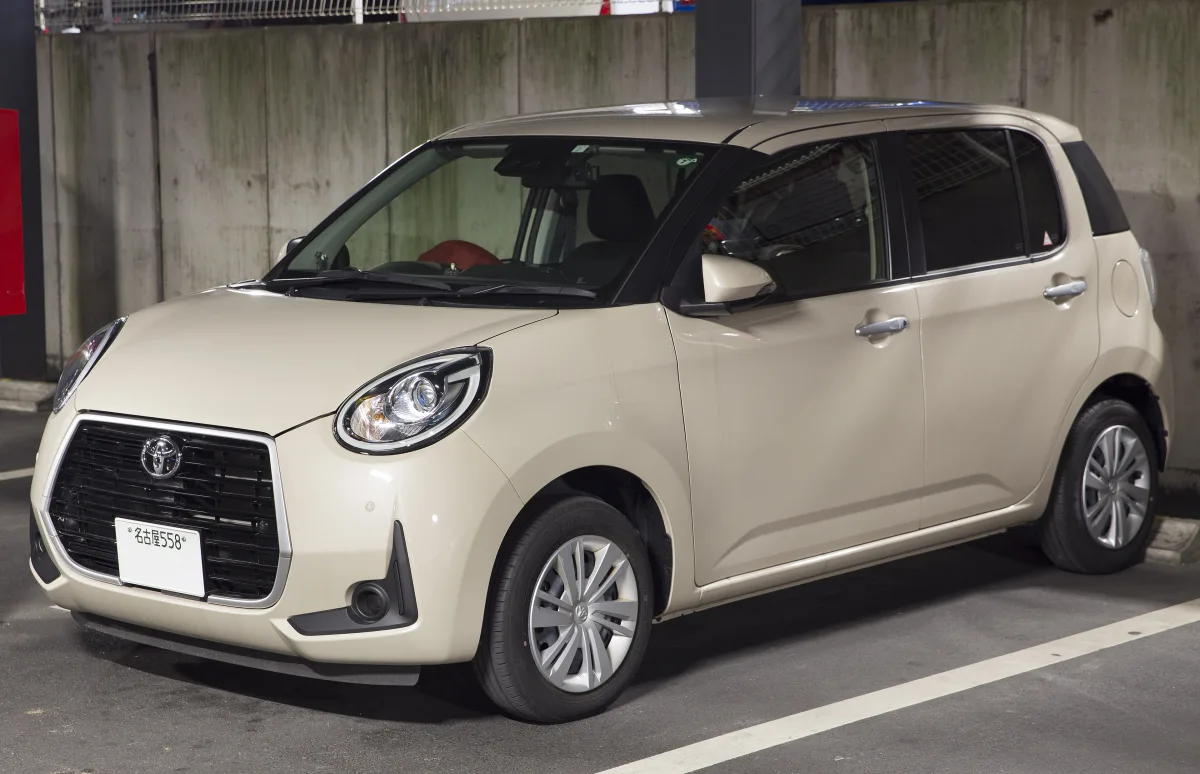
Toyota Passo (Daihatsu Boon): three generations, versions and what the buyer should know
The Toyota Passo is a compact city car produced in Japan by Daihatsu between 2004 and 2023 and sold under two names: Daihatsu Boon and Toyota Passo. In this article, we look at the generations, engines, related models such as the Daihatsu Sirion, and what to consider when buying a used car.






The Passo in brief
The Passo is the Toyota-badged version of the Daihatsu Boon. Both cars are made by Daihatsu, with the first generation overseen by Toyota's chief engineer Tetsuya Tada. The name Passo is Italian for step, while Boon was chosen for its English meaning and the sound of a child's toy car in Japanese.
Outside Japan, the first two generations of the Boon were sold as the second and third generations of the Daihatsu Sirion. So, if you see a Sirion in Lithuania, it's technically a close relative. Similarly, in Malaysia, the Perodua Myvi is based on the Boon, and in 2007, Subaru unveiled the Justy at the Frankfurt show, also based on the same platform.
Which generation to choose
The first generation (M300/AC10; 2004–2010) was designed with European tastes in mind — larger and with a more robust body. In Japan, 996 cm³ and 1.3-litre engines were offered, as well as a 936 cm³ turbo version with all-wheel drive, the Boon X4. It was refreshed in December 2006, and in 2007 this variant arrived in Europe as the Sirion.
Second generation (M600/AC30; from 2010). Launched in February 2010. Toyota offered a better-equipped 'Passo +Hana' with a more distinctive front end, which the Daihatsu lacked.
Third generation (M700; from 2016). Launched in April 2016. The better-equipped variant was called 'Boon CILQ', and Toyota marketed it as the 'Passo Moda'. In October 2018, the car received an updated safety system, 'Smart Assist III', which detects pedestrians, vehicles, and obstacles. The Passo and Boon were sold until the end of 2023.
Engines and transmissions
In the first generation in Japan, there were 996 cm³ and 1.3-litre petrol engines, as well as a 936 cm³ turbo variant, the 'Boon X4', with all-wheel drive. The transmission could be front-wheel drive or all-wheel drive. In Japanese cars, the automatic gear selector is on the steering column behind the steering wheel, and the handbrake is under the steering wheel.
Later generations also had small petrol engines, but their capacity and power varied by year and version, so it's worth checking the specific details in the car's documents.
What to check when buying a used Passo/Boon
Since the Passo is sold in Japan, make sure the car has been legally imported and that the mileage is genuine — ask for the auction sheet and technical reports. Pay attention to the right-hand drive, which might be inconvenient in Lithuania.
Inspect the body for rust, the suspension condition, and the engine operation (no oil leaks or unusual noises). The automatic transmission should shift smoothly.
If you need a car with European documents, consider the “Daihatsu Sirion”, which was sold in Europe and has a simpler parts supply.


Trim levels
Names and equipment vary by market and year; we list the versions most commonly found in Europe.
Boon / Passo (I karta)
2004–2010The first generation, known as the “Sirion” in Europe.
- 996 cm³ and 1.3-litre engines
- Option for four-wheel drive
- The turbo version is the “Boon X4”
Boon / Passo (II karta)
2010–2016The second generation with a refreshed design.
- The additional “Passo +Hana” variant
- Refreshed styling and equipment
- It was also sold as the “Sirion” in certain markets
Passo Moda / Boon CILQ
2016–2023The better-equipped third-generation version.
- Distinctive, elongated shape
- Better equipment than the base version
- Refreshed in 2018 with an even larger grille
Boon X4
2004–2010Turbo version with all-wheel drive
- 936 cc turbo engine
- All-wheel drive
- Sportier, rarer version
Generation comparison
| I karta | II karta | III karta | |
|---|---|---|---|
| Who it's for | A straightforward city car | Plenty modern equipment | Latest equipment and safety systems |
| Related model | Daihatsu Sirion (2nd generation) | Daihatsu Sirion (3rd generation) | Doesn't have a corresponding Myvi / Sirion generation |
| Safety equipment | Base | Mid-range | Smart Assist III post-2018 |
| Price in the used market (relatively) | Budget | Budget | Mid-range |
Most buyers will save with the first and second generations, but if modern safety kit is important, opt for the third generation post-2018 refresh.
Pros
- Compact and easy to manoeuvre
- Economical city car
- Technically close to the Sirion and Myvi — more info and parts
- Practical, albeit small boot
Cons
- Right-hand drive might be awkward in Lithuania
- Parts can be hard to find
- Small engines aren't designed for high-speed motorway driving
Frequently asked questions
Is the Toyota Passo the same as the Daihatsu Boon?
Yes. It's the same car, sold under two names: "Daihatsu Boon" and "Toyota Passo".
Is the Daihatsu Sirion the same as the Boon?
The first two generations of the Boon sold in Europe were badged as the second and third "Daihatsu Sirion" generations.
Is the Passo suitable for Lithuania?
Yes, if you need a small city car, but you should consider the right-hand drive and parts availability.
Updated 2026-10-21 · Trim levels and equipment vary by market and model year — check the equipment of the specific car. · Translated automatically


