 English
 Lietuvių
 Latviešu
 Eesti
 Polski
 Русский
 Українська
 Deutsch
 Nederlands
 Čeština
 Slovenčina
 Svenska
 Norsk
 Dansk
 Suomi


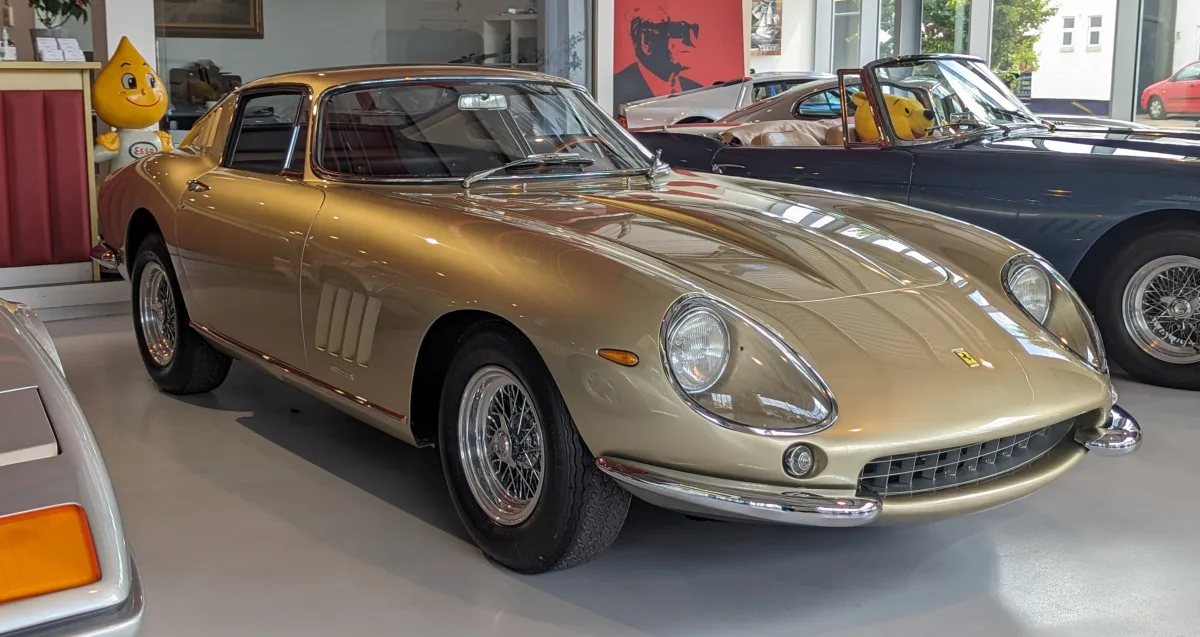
Ferrari 275: GTB, GTB/4 and GTS — 1964–1968 classics and what buyers need to know
Ferrari 275 — the mid-1960s V12 grand tourer range, comprising the coupé 275 GTB, its later iteration 275 GTB/4 and the open-top 275 GTS. This is a collector's car, so we focus on versions, authenticity and what to check.






Ferrari 275 in brief
The 275 range replaced earlier Ferrari GT models and became one of the marque's most significant of the era. The coupé 275 GTB has a long nose, short tail and beautifully sculpted lines, while the 275 GTS is an open-top car with a soft roof.
The car was designed by Pininfarina, with the coupé GTB built at the Scaglietti coachworks. Today, it's a rare and expensive collector's item in Lithuania.
Which version to choose
Key differences: 275 GTB (circa 1964–1966) with a single overhead camshaft per cylinder bank, 275 GTB/4 (circa 1966–1968) with dual overhead camshafts per bank and 275 GTS — the open-top version. Early GTBs had a shorter nose, later ones a longer, hence the collector's terms 'short nose' and 'long nose' cars.
For collectors, the GTB/4 and certain rare versions are often deemed the most valuable, but true worth heavily depends on authenticity, history and condition.
Engines and gearboxes
All 275s come with a 3.3-litre V12 engine (Colombo family design). The base GTB version is often cited with around 280 hp, while the GTB/4 has around 300 hp; exact figures vary depending on documentation and version.
The gearbox is a five-speed manual, mounted at the rear axle (transaxle), with independent suspension for all wheels. There were no automatic versions.
What to check when buying a 275
The most important thing is authenticity: check the chassis and engine numbers, paint, documents, and factory specifications. There are many restored, modified, and even imitation cars of this model on the market, so an independent expert inspection is essential before purchasing.
Assess the bodywork for corrosion, the quality of previous repairs, the condition of the V12 engine, cooling system, gearbox, and suspension. For collector cars, documented maintenance and restoration history is crucial.


Trim levels
Names and equipment vary by market and year; we list the versions most commonly found in Europe.
275 GTB
circa 1964–1966The first coupé with a single overhead camshaft per cylinder bank V12 engine.
- 3.3-litre V12 engine
- Five-speed gearbox at the rear axle
- Often — steel or aluminium body
275 GTB/4
circa 1966–1968Later coupé with two overhead camshafts per cylinder bank and a more powerful engine.
- 3.3-litre V12 with four overhead camshafts
- Often — a longer front end
- Five-speed gearbox at the rear axle
275 GTS
circa 1964–1966The open-top version with a soft roof is rarer and particularly prized by collectors.
- Open body with a soft top
- 3.3-litre V12 engine
- Five-speed gearbox at the rear axle
Comparison of 275 versions
| GTB | GTB/4 | GTS | |
|---|---|---|---|
| Who it suits | Classic coupés for enthusiasts | For collectors seeking a more powerful variant | For fans of open-top driving |
| Body | Coupé | Coupé | Open (soft top) |
| Engine | 3.3-litre V12 | 3.3-litre V12 with four camshafts | 3.3-litre V12 |
| Price in the used market (relatively) | €€€ | €€€ | €€€ |
All 275s are collectible cars whose value is determined by authenticity, history, and condition. A pre-purchase independent appraisal is essential.
Pros
- Iconic Pininfarina design
- V12 engine and spirited driving
- Rear-wheel drive and independent suspension
- Collectible value and historical significance
Cons
- Extremely expensive and rare automobile
- Many restored and modified examples, expert appraisal required
- Specialised maintenance and limited parts availability
Frequently asked questions
What's the difference between the 275 GTB and GTB/4?
The GTB/4 has a V12 engine with dual overhead camshafts per cylinder bank, making it more powerful and later in production.
Is the 275 GTS a convertible?
Yes, the 275 GTS is an open-top car with a soft roof, while the GTB is a fixed-roof coupe.
How to verify the authenticity of a 275?
Check the chassis and engine numbers, documentation, and factory specifications, and definitely consult an independent Ferrari classic expert.
Updated 2026-10-21 · Trim levels and equipment vary by market and model year — check the equipment of the specific car. · Translated automatically


