 English
 Lietuvių
 Latviešu
 Eesti
 Polski
 Русский
 Українська
 Deutsch
 Nederlands
 Čeština
 Slovenčina
 Svenska
 Norsk
 Dansk
 Suomi


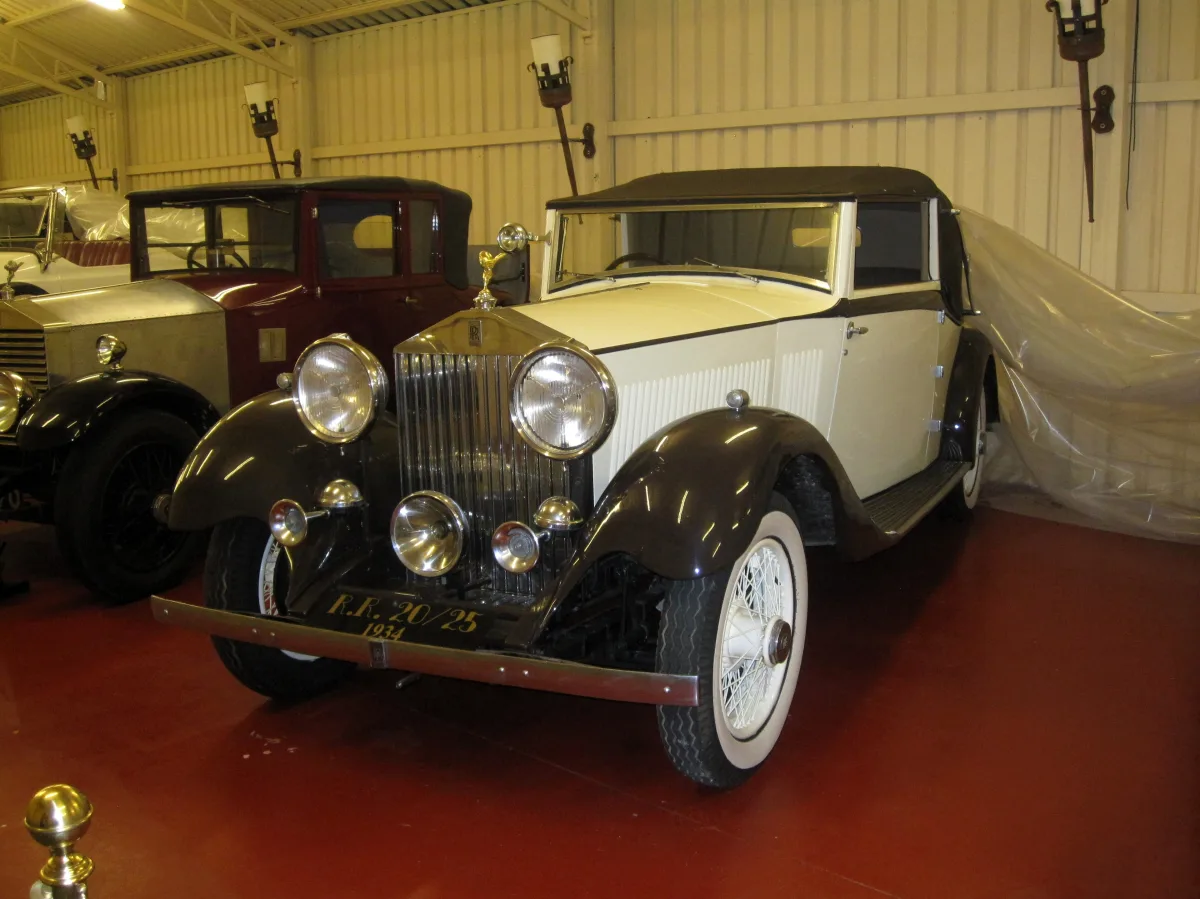
Rolls-Royce 20/25: 1929–1936 classic car and buying guide
Rolls-Royce 20/25 — the luxurious 'interwar' car produced from 1929–1936 with a six-cylinder engine, which was one of the most popular Rolls-Royces of its time. We look at what sets it apart, which bodies were most commonly made for it, and what you need to know if you're considering buying this classic car.






Rolls-Royce 20/25 in brief
The Rolls-Royce 20/25 replaced the earlier 'Twenty' and was introduced in 1929 as a 'smaller' model alongside the top-of-the-range Phantom. It was aimed at owners who wanted luxury and comfort but preferred to drive themselves rather than be chauffeured.
The car was sold as a chassis with engine — the body was ordered from a separate coachbuilder by the owner. As a result, even cars of the same model can look quite different. Several thousand units were produced, and a portion of them survive to this day.
Bodies and versions
Since each car was built to order, classification is usually by body type: closed saloon, limousine, cabriolet (Drophead Coupé) or open tourer body. Bodies were made by renowned firms such as Barker, Park Ward, Hooper, Thrupp & Maberly or Freestone & Webb.
When shopping for a 20/25, collectors and enthusiasts first look at the body maker, originality and history, rather than the 'trim level' as in modern cars. Documented history can significantly affect a car's value.
Engine and gearbox
All 20/25 models came with an inline six-cylinder petrol engine with a capacity of around 3.7 litres. The manufacturer never officially declared the power output, and today sources cite varying figures, so we won't specify an exact number.
The gearbox is a four-speed manual, with rear-wheel drive. From the start, the car was renowned for its smooth and quiet engine operation, which was the hallmark of the Rolls-Royce brand.
What to check when buying a 20/25
Buying such a car is best done through model-specific clubs or specialists who can verify the chassis number and the provenance of the body. Request all historical documents: previous owners, restoration work, body changes. A single car's body was often changed over time.
Inspect the wooden body frame, as it is the most susceptible to moisture and aging. Check the brakes, steering mechanism, suspension, and engine oil pressure. Spare parts are available, but they are expensive, and the work is best left to specialists.
Before buying, it's worth having a classic car inspected with an expert mechanic to ensure the restoration was done to a high standard. Poorly executed work can cost much more in the long run than a cheaper, but honest, condition.


Body types
The Rolls-Royce 20/25 did not have trim levels in the modern sense—each body was custom-built to order, so we list the most common body types.
Saloon
1929–1936A closed sedan body was the most common form for the 20/25.
- A closed body with four doors
- Often featuring wood details and leather in the interior
- Most practical for daily (collector) driving
Limousine
1929–1936Luxurious body with a longer wheelbase and more space in the rear
- Often — a separate compartment for the driver
- More room for passengers
- Less common than the saloon
Drophead Coupé
1929–1936Convertible body — one of the most sought-after
- Soft-top convertible
- Often a two-door body
- More expensive in the used (collector) market
Tourer
1929–1936Open body with a folding roof — a sportier choice
- Open body, lighter appearance
- Often — an additional protective roof
- Rare and sought-after by collectors
Comparison of body types
| Saloon | Drophead Coupé | Tourer | |
|---|---|---|---|
| Who it suits | For those seeking maximum comfort | For those who enjoy open-top driving | For a rarer, sportier look |
| Body type | Fixed roof | Convertible roof | Open-top |
| Engine | Inline 6-cylinder, around 3.7 litres | Inline 6-cylinder, around 3.7 litres | Inline 6-cylinder, around 3.7 litres |
| Price in the used market (relatively) | €€ | €€€ | €€€ |
The closed Saloon is most commonly chosen — it's the most practical and easiest to find. If you're after a rarer car, consider the Drophead Coupé or Tourer, but they come at a higher price.
Pros
- The smooth, quiet operation of a six-cylinder engine
- Built as a handcrafted car with a bespoke body
- A pivotal part of Rolls-Royce history
- Active club and enthusiast community
Cons
- Expensive maintenance and parts
- Requires specialist work
- An old car — more suited to pleasure than daily driving
Frequently asked questions
How does the 20/25 differ from the Phantom?
The 20/25 was a smaller, more affordable model aimed at owners who drove themselves, while the Phantom was larger and more luxurious, often with a chauffeur.
Why do 20/25 bodies look so different?
Rolls-Royce built the chassis with the engine, and the body was constructed to order by separate coachbuilders, so each car could look unique.
Is the 20/25 suitable for daily driving?
Technically possible, but such a car is better suited to collection use. It's old, expensive to maintain, and requires specialist attention.
Updated 2026-10-21 · Trim levels and equipment vary by market and model year — check the equipment of the specific car. · Translated automatically


