 English
 Lietuvių
 Latviešu
 Eesti
 Polski
 Русский
 Українська
 Deutsch
 Nederlands
 Čeština
 Slovenčina
 Svenska
 Norsk
 Dansk
 Suomi


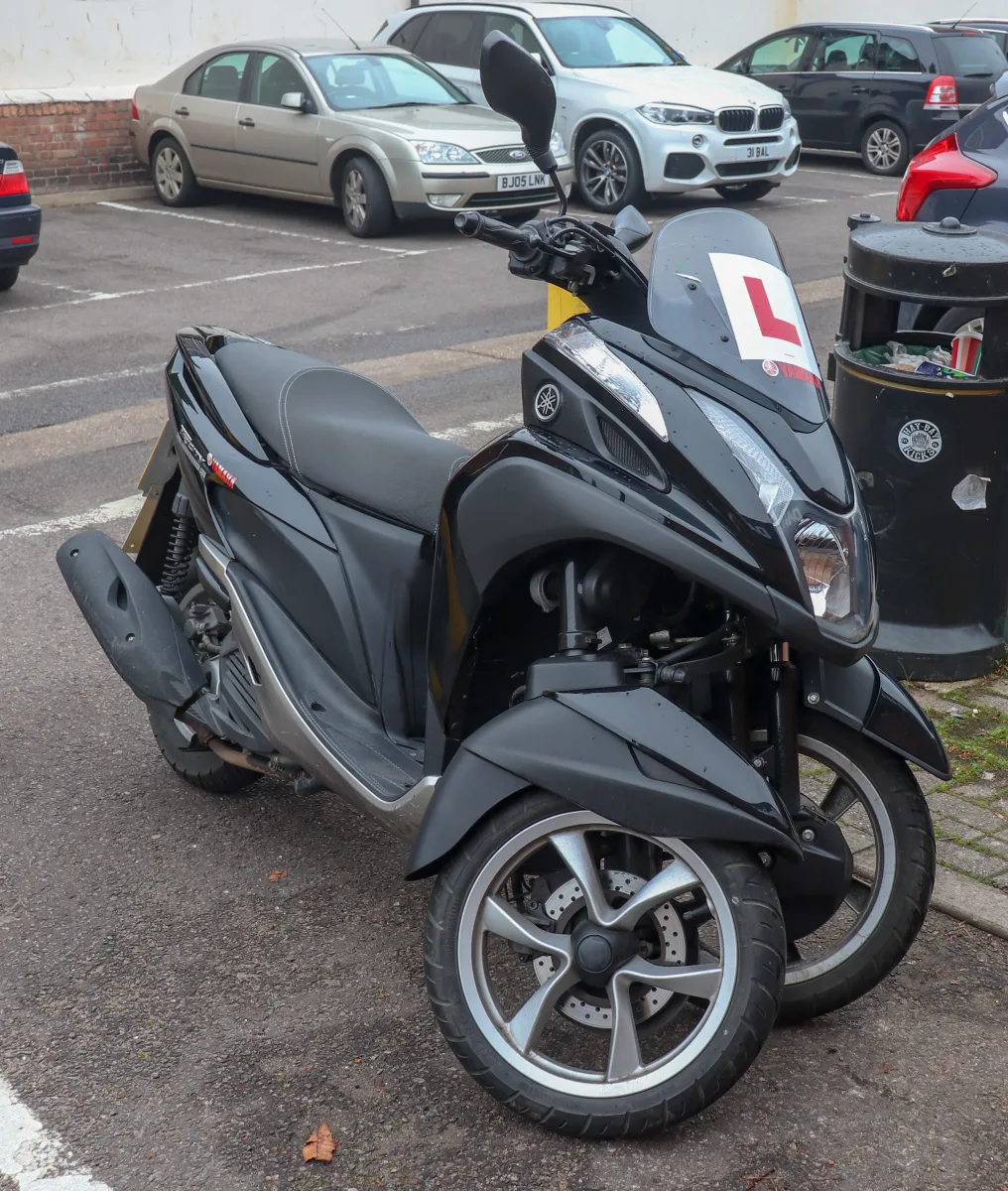
Yamaha Tricity: 125, 155 and 300 versions, what to check when buying
Yamaha Tricity — a three-wheeled scooter with two tilting front wheels, introduced in 2014. We look at how the 125, 155 and 300 cm³ versions differ, which engines are used and what to consider when buying used.






Tricity in brief
The Tricity is an urban scooter with two front wheels and a tilting mechanism (Yamaha calls it LMW — Leaning Multi Wheel). Thanks to the two front wheels, the scooter is more stable on wet or slippery roads than a standard two-wheeled scooter, and it leans into corners like a motorcycle.
In the used market, the Tricity is often sought after by those who want safer, more stable riding in the city but don't want to switch from a scooter to a car. Before buying, check which driver's license category is required for the specific version in your country, as rules vary.
Versions and generations
The first version was the Tricity 125 (2014). Later came the 155 cm³ Tricity 155, and in 2020, the larger Tricity 300 was introduced with a more powerful engine, more luxurious equipment and a system to aid stopping and parking.
Due to limited supply and varying market characteristics, the 125 and 155 cm³ classes are the most popular in the used market. The 300 cm³ version is better suited to those who need longer journeys or riding outside the city.
Engines and transmission
The Tricity 125 features a liquid-cooled 125 cm³ single-cylinder four-stroke engine with around 12 hp, while the Tricity 155 has a 155 cm³ engine with around 15 hp. The Tricity 300 engine is approximately 292 cm³ and produces around 28 hp.
All models use an automatic belt-driven CVT transmission, making them easy to ride without the need to change gears. Due to its two front wheels and more complex suspension, the Tricity weighs significantly more than a typical scooter of the same size.
What to check when buying a used Tricity
First, inspect the front tilting mechanism: try to turn and move the front wheels by hand, looking for any play or unusual noises. The front tyres should wear evenly, and the tread and sidewalls should not be cracked.
Check the CVT transmission (variator, belt, and pulleys) — you shouldn't feel any jerking or vibration while riding. Ensure the brakes work evenly, that ABS functions (if equipped), and that electrical components are in order: headlights, turn signals, and the instrument cluster.
Request the service history and check if the fuel, coolant, and transmission fluids have been changed. Verify the vehicle's category in the documents, as this determines who can ride it.


Versions and trims
Names and equipment vary by market and year, so here we describe versions by engine size.
Tricity 125
2014–The first and most affordable version for city use.
- 125 cm³ engine, around 12 hp
- Automatic CVT transmission
- Often includes ABS, depending on the year
Tricity 155
Later yearsA slightly more powerful version with a larger capacity.
- 155 cm³ engine, around 15 hp
- More power for accelerating and cruising on main roads
- Similar features to the 125 version
Tricity 300
2020 onwardsThe largest and most luxurious version, ideal for longer journeys.
- Around 292 cm³ engine, around 28 hp
- Often includes ABS
- Helps keep the scooter stable when stopped
Comparison of Tricity versions
| Tricity 125 | Tricity 155 | Tricity 300 | |
|---|---|---|---|
| Who it's for | For city driving and short distances | For city and main road driving | For longer journeys |
| Engine capacity | 125 cm³ | 155 cm³ | around 292 cm³ |
| Power (approx.) | around 12 hp | around 15 hp | around 28 hp |
| Transmission | CVT | CVT | CVT |
| Price in the used market (relatively) | € | €€ | €€€ |
Most city drivers will find the 125 or 155 cm³ versions more than adequate. The Tricity 300 is worth considering only if you frequently travel on faster roads.
Pros
- Two front wheels provide stability
- Handles like a motorcycle, so riding feels natural
- Automatic transmission — easy to drive
- Nippy in city traffic and easy to park
Cons
- Heavier than a typical scooter of the same size
- More complex front end — costlier maintenance
- Limited supply of used models
Frequently asked questions
Can you ride a Tricity with a B category license?
This depends on the country's regulations and the specific version's category in the documents. Before buying, check the current rules and vehicle registration details.
How does the Tricity differ from a standard scooter?
Two tilting front wheels provide more grip and stability, especially on wet or slippery roads. The trade-off is increased weight and a more complex front end.
Which version to choose used?
Most will find the 125 or 155 cm³ models suitable: they're economical and easier to find. The 300 cm³ version is better for longer journeys, but it's pricier.
Updated 2026-10-21 · Trim levels and equipment vary by market and model year — check the equipment of the specific car. · Translated automatically


