 English
 Lietuvių
 Latviešu
 Eesti
 Polski
 Русский
 Українська
 Deutsch
 Nederlands
 Čeština
 Slovenčina
 Svenska
 Norsk
 Dansk
 Suomi


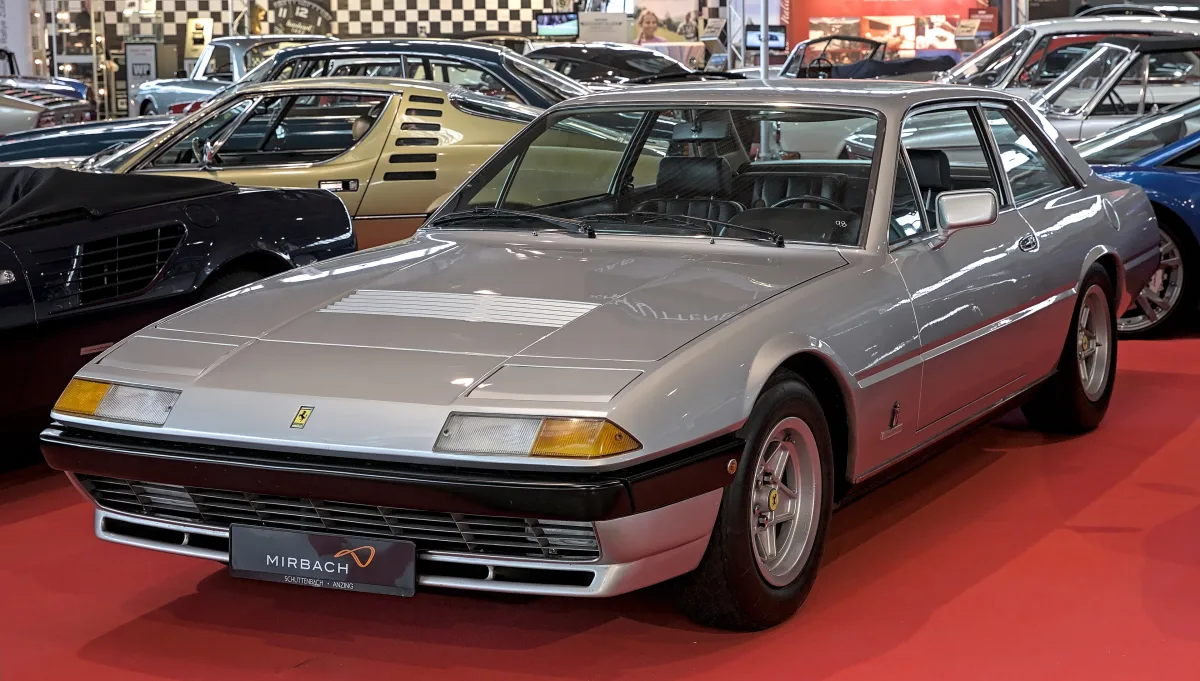
Ferrari 400: 1976–1985 2+2 coupe with V12 and automatic transmission
Ferrari 400 — a 2+2 coupe with a 4.8-litre V12 engine, produced around 1976–1985. We review its versions, engine, automatic transmission, and what to check when buying this classic Ferrari.






Ferrari 400 in brief
The 400 was Ferrari's four-seater coupe, built on the foundation of the earlier 365 GT4 2+2. The design was by Pininfarina. It was the first Ferrari model to offer an automatic transmission, making it particularly suited to long journeys.
Today, the 400 is considered a fairly practical classic Ferrari: it's roomier than the usual two-seater models, and the price on the market is often lower than that of sporty Ferraris.
Which version to choose
The first cars were called the 400 (sometimes 400 GT), and from 1979 the 400i with fuel injection appeared, which solved carburettor regulation problems and better met environmental requirements.
The cars were offered with a manual or automatic transmission. The manual version is more highly valued by collectors, while the automatic is more convenient for journeys. In 1985, the 400 was replaced by the 412.
Engine and transmission
The engine is a 4.8-litre (around 4,800 cc) V12, with carburettors in the early versions, and fuel injection in the 400i. Power output is around 310–340 hp, depending on the version and market.
The manual transmission is a five-speed, the automatic a three-speed, sourced from a US manufacturer. The automatic version successfully complemented the car's image as a luxurious GT.
What to check when buying a Ferrari 400
Like other Ferraris from this era, the main concern is corrosion. Check the sills, wheel arches, boot floor, and front end. Restoration is often more expensive than the car itself.
Assess the engine's condition based on documented service history, particularly the distributor, cooling system, and fuel system. Also, check the brakes, suspension, and electrical system, and have the inspection done by an experienced Ferrari classic specialist.


Trim levels
Names and equipment vary by market and year; we list the versions most commonly found in Europe.
400 (karbiuratoriai)
1976–1979The first series with carburetors.
- 4.8-litre V12 engine
- Manual or automatic transmission
- Often — leather interior
400i
1979–1985Later version with fuel injection.
- 4.8-litre V12 with Bosch fuel injection
- Manual or automatic transmission
- Often — more comprehensive equipment
400 Automatic
1976–1985Version with automatic transmission — most comfortable for long journeys.
- Automatic transmission
- 4.8-litre V12 engine
- Often — comfort features
Comparison of Ferrari 400 versions
| 400 | 400i | Automatinė | |
|---|---|---|---|
| Who it's for | For carburettor engine enthusiasts | The more practical classic Ferrari | For a comfortable touring car |
| Fuel system | Carburettors | Fuel injection | Depends on the year |
| Price in the used market (relatively) | €€€ | €€€ | €€€ |
The Ferrari 400 is one of the more accessible classic V12 Ferraris, perfect for long journeys. Choose based on condition and documented history, not just the version.
Pros
- V12 engine and true Ferrari character
- Spacious 2+2 coupe
- Available with an automatic gearbox
- Pininfarina design
Cons
- Risk of corrosion
- Expensive maintenance and parts
- Automatic gearbox is less sporty
Frequently asked questions
When was the Ferrari 400 produced?
The Ferrari 400 was produced around 1976–1985. It was replaced by the 412.
How does the 400i differ from the 400?
The 400i has a fuel injection system instead of carburetors and was introduced in 1979.
Can the Ferrari 400 be automatic?
Yes, it was the first Ferrari to offer an automatic transmission.
Updated 2026-10-21 · Trim levels and equipment vary by market and model year — check the equipment of the specific car. · Translated automatically


