 English
 Lietuvių
 Latviešu
 Eesti
 Polski
 Русский
 Українська
 Deutsch
 Nederlands
 Čeština
 Slovenčina
 Svenska
 Norsk
 Dansk
 Suomi


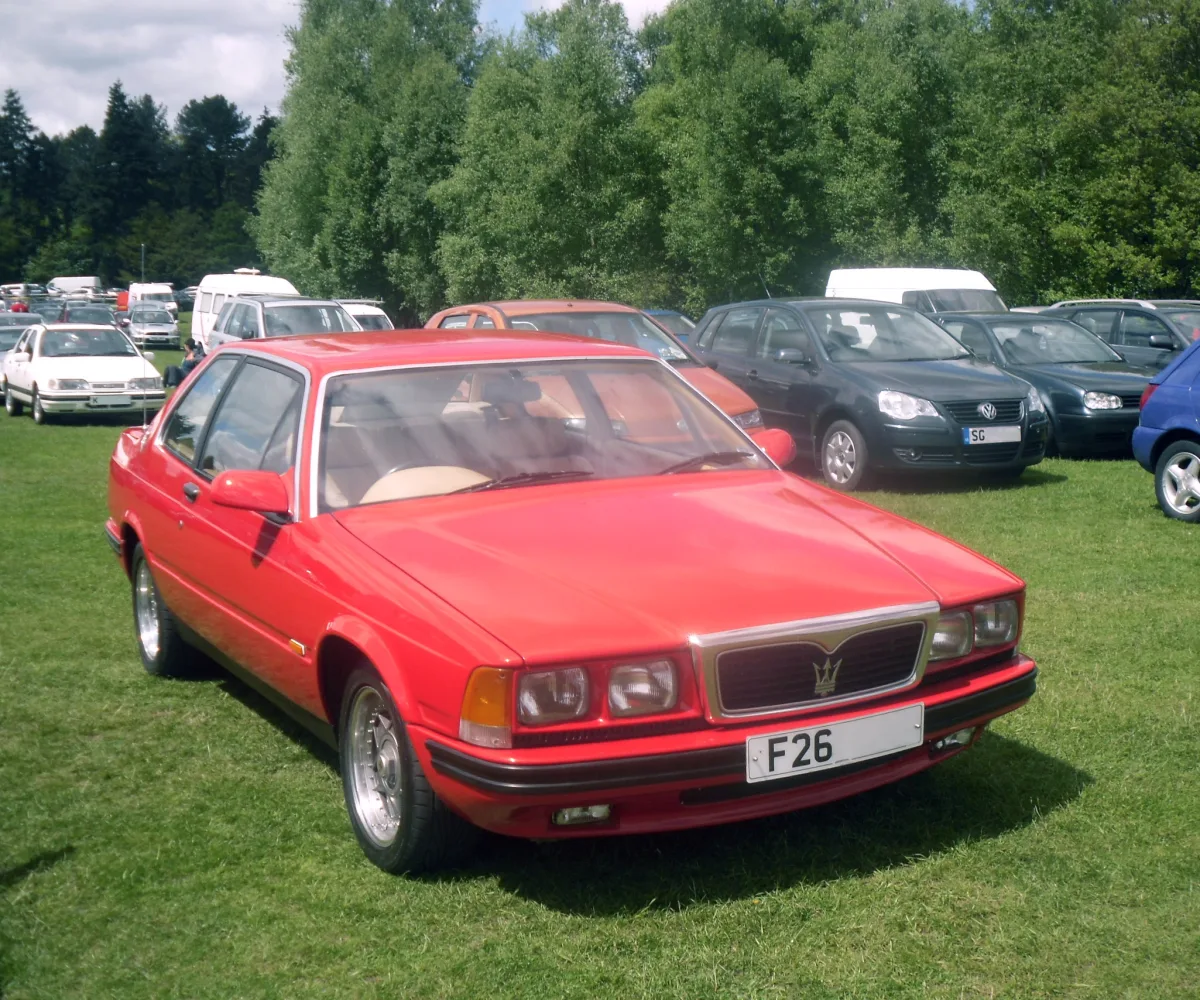
Maserati 228: the two-seat „Biturbo“ and what to know when buying
The Maserati 228 is a late 1980s coupe with a 2.8-litre twin-turbo V6 engine, based on the „Biturbo“. It's a rare car, so we'll delve into its history, tech, and the risks for buyers.






The Maserati 228 in brief
The Maserati 228 was produced from 1986 to 1992. It's a two-door coupe based on the „Biturbo“ family architecture, but with a larger 2.8-litre V6 engine and a four-seat interior.
Only a few hundred units were made, making it a rare collector's item today. Prices and availability depend heavily on condition and documentation.
What sets it apart from other „Biturbo“ models
The 228 stands out not just with its larger engine, but also with a more refined appearance and a more luxurious interior with leather and wood. It's not a mass-market „Biturbo“, but a pricier, limited-edition coupe.
Due to the small production run, the choice of parts is narrower than for more popular „Biturbo“ models, so you often have to hunt through specialist clubs and suppliers.
The engine and gearbox
The 228 is powered by a 2.8-litre V6 twin-turbo petrol engine with around 250 HP. It's rear-wheel drive with a five-speed manual gearbox.
This engine setup was cutting-edge for its time but complex: two turbos, lots of oil and cooling pipes, and plenty of electrical connections. So, specialist maintenance is a must.
What to check when buying a used 228
Most importantly — the condition of the engine and turbochargers: check the oil leaks, smoke, cooling system, and signs of overheating. Also, inspect the electrical system, as the 'Biturbo' family of cars is widely known for electrical issues.
Check the body for rust, the interior leather, and wood trim, as their restoration can be expensive. Ask for a full service history and check if the car hasn't undergone major modifications.


Version
The 228 didn't have a unified trim level system; what matters most is the car's condition and originality.
Maserati 228
1986–1992The main and only version with a 2.8-litre twin-turbo V6 engine.
- 2.8-litre V6 with twin turbochargers
- 5-speed manual gearbox, rear-wheel drive
- Often — leather and wood in the interior
Comparison
| Originali būklė | Restauruotas | Su didesne rida | |
|---|---|---|---|
| Who it's for | For the collector | For the enthusiast | For occasional driving |
| Most importantly | Documents and Originality | Condition and Service History | Engine and Turbo Condition |
| Transmission | Rear-Wheel Drive | Rear-Wheel Drive | Rear-Wheel Drive |
| Price in the Used Market (Relatively) | High-end | High-end | Mid-range |
The best choice is the most original, well-documented car with a clear service history. Cheap examples often turn out to be the most expensive due to repairs.
Pros
- A Rare and Unique Car
- Characterful Twin-Turbo V6
- Luxurious Interior
- Italian Design
Cons
- Complex and Expensive Maintenance
- Hard to Find Parts
- Risk of electrical and engine problems
Frequently asked questions
Is the Maserati 228 suitable for daily use?
Rarely. It's a rare, complex car best suited for occasional use and collecting.
How many were made?
Only a few hundred units were produced, making the 228 the rarest model in the 'Biturbo' family.
Is it hard to find parts?
You'll need to search through specialist Maserati clubs and suppliers. The parts supply is limited, so condition is especially important when buying.
Updated 2026-10-21 · Trim levels and equipment vary by market and model year — check the equipment of the specific car. · Translated automatically


