 English
 Lietuvių
 Latviešu
 Eesti
 Polski
 Русский
 Українська
 Deutsch
 Nederlands
 Čeština
 Slovenčina
 Svenska
 Norsk
 Dansk
 Suomi


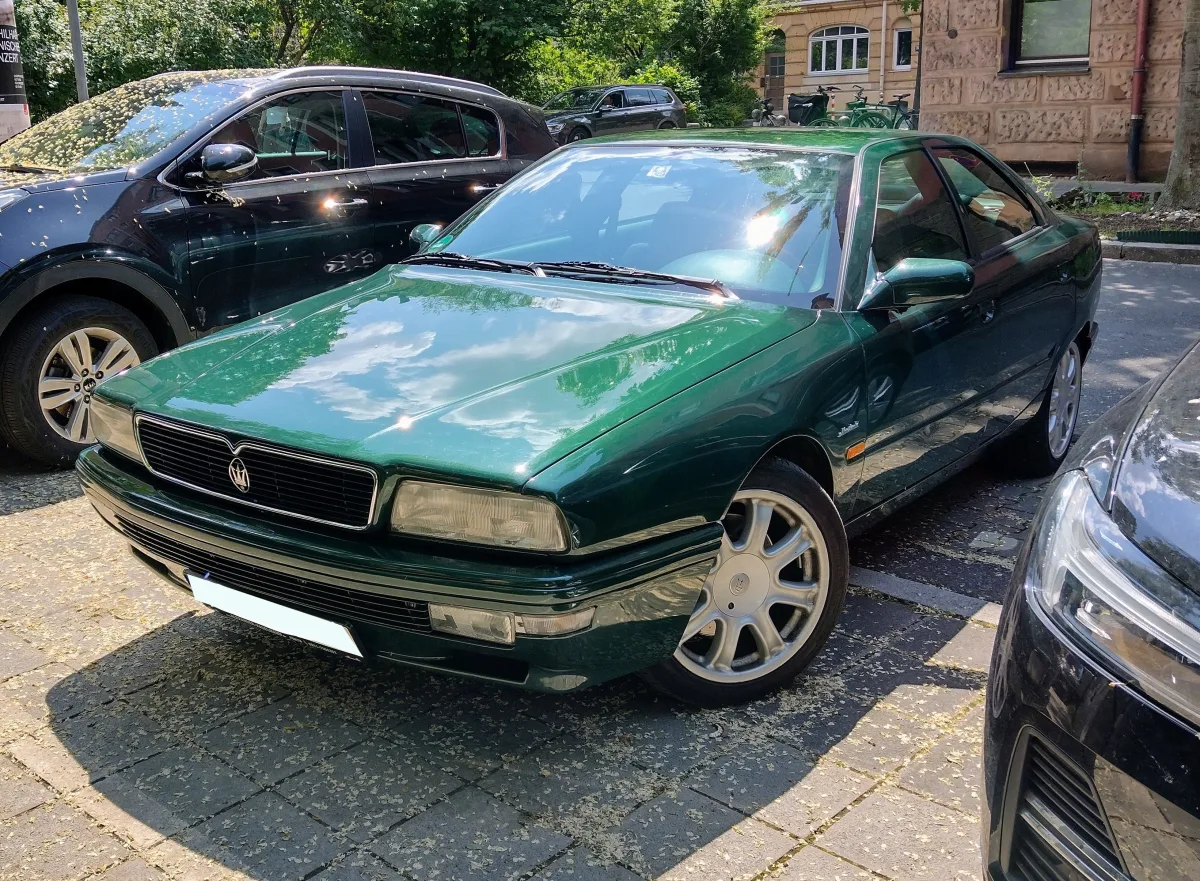
Maserati Quattroporte IV (AM337): V6 and V8, Evoluzione and buying
Maserati Quattroporte IV (Tipo AM337) — 1994–2001 model compact Maserati sedan with twin-turbo V6 and V8 engines. We look at the engines, Evoluzione version and what to check when buying.






Quattroporte IV in brief
The fourth generation was unveiled in April 1994 in Turin. It was the first Maserati built under Fiat ownership. Based on the stretched Biturbo architecture, making the car more compact than its predecessors and successors.
The angular, wedge-shaped body was designed by Marcello Gandini. The interior is trimmed with Connolly leather and burled walnut.
Evoluzione and changes
After Ferrari took over 50% of Maserati in 1997, the Evoluzione version was introduced at the 1998 Geneva Motor Show: 400 out of 800 key components were changed or improved. Power remained the same, but the interior, mirrors and build quality were enhanced.
In the Evoluzione versions, the 2.0-litre V6 engine was discontinued, and cars are identifiable by the V6 evoluzione and V8 evoluzione badges on the wings. Around 2,400 cars were produced, including 730 Evoluzione models.
Engines and transmissions
Initially offered with a 2.8-litre twin-turbo V6 (284hp) for export and a 2.0-litre V6 (287hp) for Italy, where larger engines are taxed more heavily. In 1996, a 3.2-litre twin-turbo V8, 335hp, was added.
The standard gearbox is a six-speed Getrag manual, with an optional four-speed automatic (ZF 4HP22 or BTR).
What to check when buying a Quattroporte IV
Twin-turbo V6 and V8 engines demand meticulous maintenance. Check the turbos, oil leaks, cooling system, and service history – buying without it is not recommended.
Inspect the interior trim (leather, wood), electronics, and suspension components. Source parts from specialist Maserati suppliers.


Trim levels
The Quattroporte IV doesn't have conventional trim levels; we list versions by engine and series.
V6 versijos
1994–2001 model yearsTwin-turbo V6 with 2.0 L (for Italy) or 2.8 L (for export).
- 2.0 L (287 HP) or 2.8 L (284 HP) V6
- Getrag 6-speed manual or automatic
- Leather and wood interior
V8 versija
1996–2001 model yearsThe more powerful 3.2 L twin-turbo V8 version.
- 3.2 L V8, 335 HP
- Faster acceleration
- Badges on the wings
Evoluzione
1998–2001 model yearsUpdated version post-Ferrari acquisition: refined interior and quality.
- 400 changed or improved parts
- Maserati trident badge instead of oval clock
- V6 and V8 variants
Comparing versions
| 2,0 V6 | 2,8 V6 | 3,2 V8 | Evoluzione | |
|---|---|---|---|---|
| Power | 287 HP | 284 HP | 335 HP | As the base model |
| Who it's for | Variant tailored for Italy | Export variant | For dynamic driving | Enhanced variant |
| Gearbox | Getrag 6 MT | Getrag 6 MT or 4 AT | Getrag 6 MT or 4 AT | The same gearbox |
| Price in the used market (relatively) | €€ | €€ | €€€ | €€€ |
The V8 is the most powerful, while the Evoluzione is the most reliable and best-built. The V6 is ideal for those prioritising cost.
Pros
- A compact Maserati with a striking design
- Powerful twin-turbo engines
- Luxurious interior with leather and wood
- Rarer and more collectible
Cons
- Expensive maintenance and parts
- Turbo engines require meticulous care
- Aging electronics
Frequently asked questions
Which Quattroporte IV engines are there?
2.0 and 2.8-litre twin-turbo V6, later a 3.2-litre twin-turbo V8 (335 hp).
What is the Evoluzione?
The refreshed version, launched in 1998 after the Ferrari takeover, with around 400 parts changed.
How many were made?
Around 2,400 cars in total, of which 730 were Evoluzione.
Updated 2026-10-21 · Trim levels and equipment vary by market and model year — check the equipment of the specific car. · Translated automatically


