 English
 Lietuvių
 Latviešu
 Eesti
 Polski
 Русский
 Українська
 Deutsch
 Nederlands
 Čeština
 Slovenčina
 Svenska
 Norsk
 Dansk
 Suomi


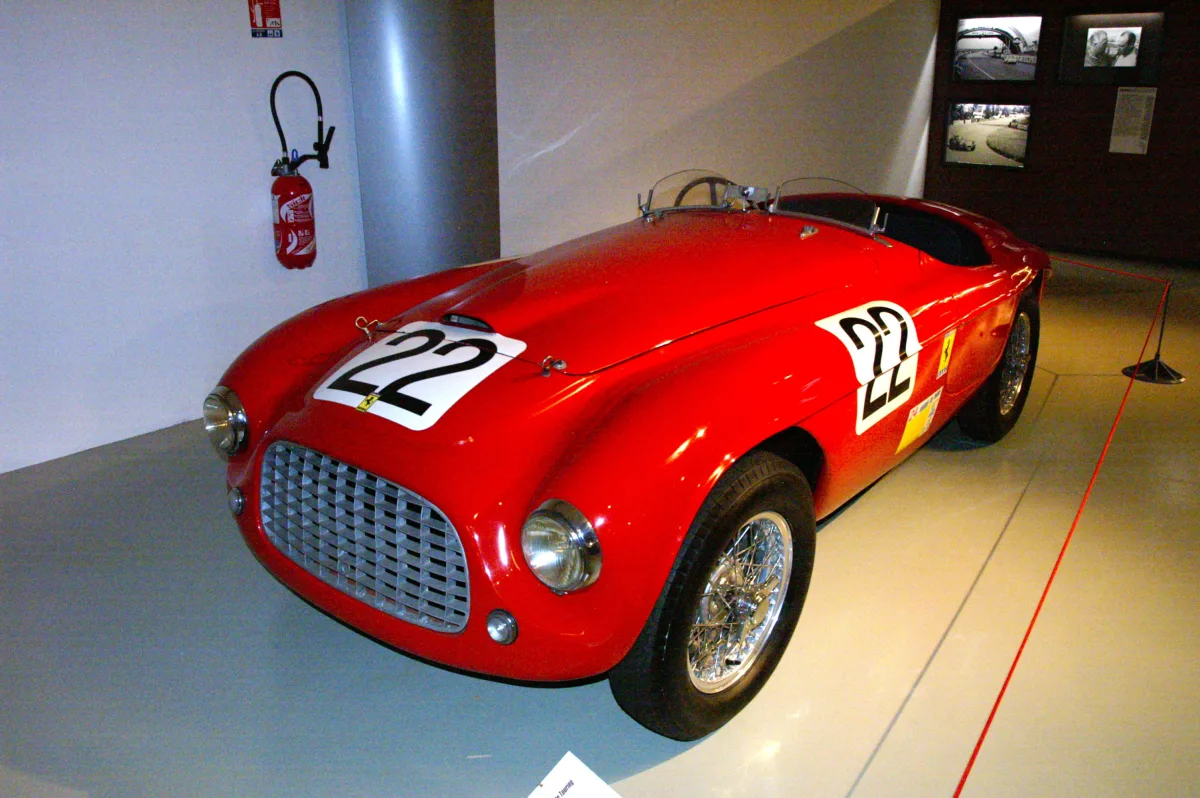
Ferrari 166: the first Ferraris — from racing MM to Inter
The Ferrari 166 — the V12 model line that began in 1948, featuring both race cars (S, SC, MM) and the first road-going Ferraris (Inter). We look at the versions, engine, and what you need to know when buying such a special classic car.






Ferrari 166 in brief
The '166' denotes the displacement per cylinder — around 166 cm³. The range uses a 2.0-litre V12 engine. The racing versions debuted in 1948, with the road-going Inter following in 1949.
By 1949–1950, these cars had already secured victories in the Mille Miglia and Le Mans races. Today, the 166 is one of the most prized chapters in Ferrari's history.
Versions — what sets them apart
The 166 MM is the racing version, named after the Mille Miglia. Its most famous bodies are the Touring 'Barchetta'. The 166 S and SC were also built for the track.
The 166 Inter is the road-going version with coupé and cabriolet bodies, crafted by Italian coachbuilders, so each example can differ. Don't confuse it with the later Dino 166 P and 166 F2 — they had a 1.6-litre V6 engine.
Engine and tech
The engine is a Colombo-designed 2.0-litre V12, with power outputs varying by version. The racing cars were more potent than the Inter.
This is early Ferrari tech, so don't expect modern comforts — it's a collector's item and a historic rally car.
What to check when buying a Ferrari 166
Most importantly, due to the very low numbers — provenance, chassis and engine numbers, and racing history. Request all documents and expert certification, especially for originality.
Many 166 cars were modified, restored, or rebuilt, so carefully check if the body, engine, and chassis match each other.
Before buying, consult with a classic Ferrari specialist and participate only in trusted transactions.


Trim levels
Versions are specified by purpose; bodies built to order.
166 Inter
From 1949Body style — coupé or cabriolet.
- Body designed for road use
- 2.0-litre V12
- Bodies built to order
166 MM
From 1948Racing version, named after the Mille Miglia.
- 2.0-litre V12
- Often — Touring 'Barchetta' body
- Racing pedigree
166 S / SC
1948Early sporty versions.
- 2.0-litre V12
- Racing car
- Very rare
Comparing versions
| 166 Inter | 166 MM | 166 S / SC | |
|---|---|---|---|
| Who it suits | For collections and road trips | For shows and historic racing | For collections |
| Engine | 2.0-litre V12 | 2.0-litre V12 | 2.0-litre V12 |
| Price in the used market (relatively) | €€€ | €€€ | €€€ |
The sole version suited to road trips — Inter. MM and S/SC — racing pedigree and highest collectible value; their provenance and documentation are key.
Pros
- The first Ferraris — historic value
- Colombo V12 engine
- Victories in the Mille Miglia and Le Mans races
- Every example is unique
Cons
- Distinctive pricing
- Many modified or tampered cars
- Lack of modern comfort
Frequently asked questions
What does '166' mean?
A single-cylinder displacement of around 166 cm³, with the entire engine being a 2.0-litre V12.
How do the 166 Inter and 166 MM differ?
The Inter is a road-going version with a coupé or convertible body, while the MM is a racing version named after the Mille Miglia.
Is the Dino 166 the same?
No. The Dino 166 P and 166 F2 are later models with a 1.6-litre V6 engine.
Updated 2026-10-21 · Trim levels and equipment vary by market and model year — check the equipment of the specific car. · Translated automatically


