 English
 Lietuvių
 Latviešu
 Eesti
 Polski
 Русский
 Українська
 Deutsch
 Nederlands
 Čeština
 Slovenčina
 Svenska
 Norsk
 Dansk
 Suomi


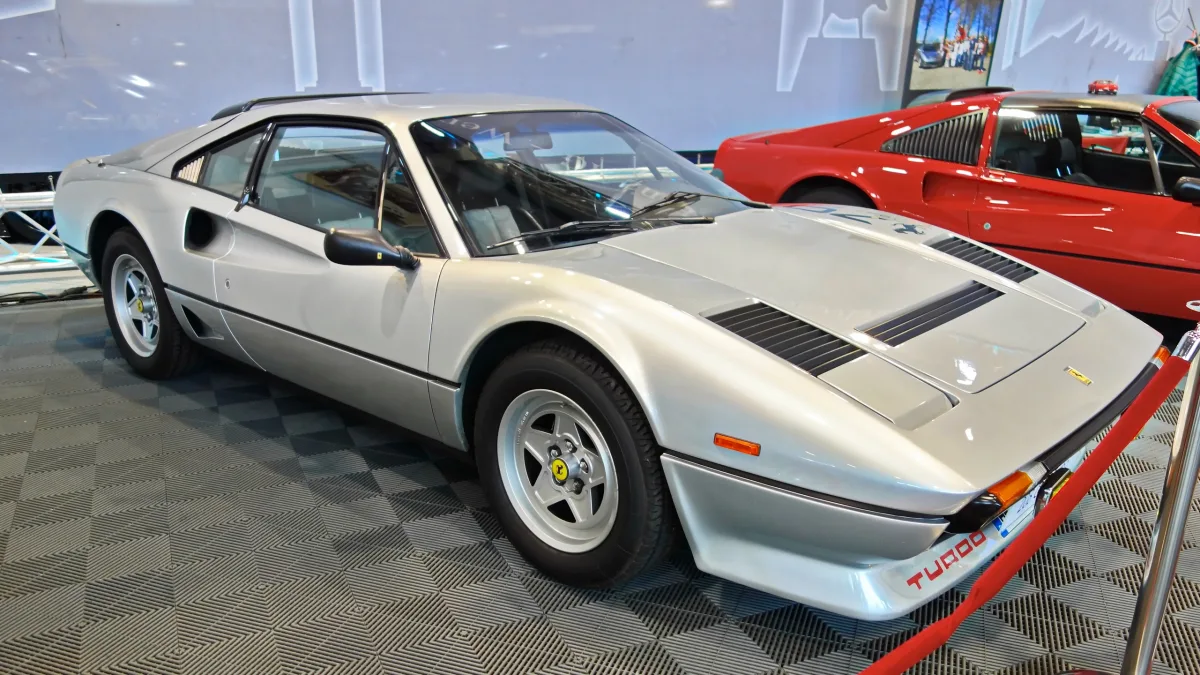
Ferrari 208 GTB/GTS: 2.0 l V8 'little' Ferrari and what the buyer should know
The Ferrari 208 GTB and 208 GTS are 308 series variants with a 2.0-litre V8 engine, primarily created for the Italian market. In this article, we review both the naturally aspirated and turbo versions, how they differ from the standard 308, and what to check when considering buying such a rare car.






208 GTB/GTS in brief
The 308 GTB (fixed-roof coupe) and 308 GTS (with removable roof panel, known as a targa) were produced by Ferrari from 1975 to 1985. The 208 GTB and GTS featured the same bodies but with a smaller, 2.0-litre engine. They were mainly intended for Italy, where higher taxes were applied to cars with larger engine capacities.
This is a two-seater with a mid-mounted V8 engine and rear-wheel drive. It's extremely rare in Lithuania, making it a sought-after model among collectors and classic car enthusiasts.
Naturally aspirated vs turbo – what's the difference?
The initial 208 GTB and GTS models came with a naturally aspirated 2.0-litre V8 engine, which produced around 155 hp, less than the 3.0-litre 308. As a result, the car had a more sedate character but retained the 308's design and driving feel.
Later, the 208 GTB Turbo and 208 GTS Turbo were introduced, featuring a turbocharged engine producing around 220 hp. Externally, they differ slightly from the naturally aspirated versions, such as with 'Turbo' badges, so always verify the true version via documents and engine number when buying.
Engine and gearbox
All 208 models come with a transversely mounted 2.0-litre V8 engine and a five-speed manual gearbox with a classic metal gate shifter. No automatics were available.
These Ferrari engines are well-known for requiring timing belts to be changed according to manufacturer intervals and time, not just mileage. When buying, insist on seeing records of work carried out.
What to check when buying a 208 GTB/GTS
First, look for rust spots on the sills, wings, rear end, and front panels, and check if the body has been repaired after an accident. A full service history is crucial, especially for timing belts, cooling system, suspension, and fuel system maintenance.
Check that the engine and chassis numbers match the documents, that the car is original, and that it has documents and registration suitable for the European market. Before buying, it's worth hiring a specialist familiar with classic Ferraris.


Trim levels
Trim levels weren't divided by tiers; versions differ by body and engine.
208 GTB
Atmospheric generationClosed coupé body with an atmospheric 2.0-litre V8.
- Two-seater closed coupé
- Atmospheric 2.0-l V8 (around 155 hp)
- Five-speed manual gearbox
208 GTS
Atmospheric generationThe same engine, but with a removable roof panel.
- Removable roof panel (targa)
- Atmospheric 2.0-l V8
- Five-speed manual gearbox
208 GTB Turbo
turbo generationThe faster, fixed-roof version with a turbocharger.
- Turbocharger (around 220 hp)
- Two-seater closed coupé
- Often — 'Turbo' badges
208 GTS Turbo
turbo generationTurbo version with a removable roof panel.
- Turbocharger (around 220 hp)
- Removable roof panel (targa)
- Five-speed manual gearbox
208 versions comparison
| 208 GTB | 208 GTS | 208 GTB Turbo | 208 GTS Turbo | |
|---|---|---|---|---|
| Who it's for | Collectors, those who enjoy a more relaxed drive | For open-top driving on fine days | For faster driving | For faster open-top driving |
| Body | Fixed-roof coupe | Targa | Fixed-roof coupe | Targa |
| Engine | 2.0-litre V8, naturally-aspirated | 2.0-litre V8, naturally-aspirated | 2.0-litre V8, turbocharged | 2.0-litre V8, turbocharged |
| Price in the used market (relatively) | €€€ | €€€ | €€€ | €€€ |
If you want a cleaner, simpler car, go for the naturally-aspirated version. If performance is key, choose the Turbo. The most important thing is the car's condition and documented history.
Pros
- A rare and collectible Ferrari with a classic 308 look
- A well-balanced mid-engine car
- Stunning Pininfarina design
- The Targa version allows for open-top driving
Cons
- Very limited supply
- Expensive maintenance and parts
- The naturally-aspirated version is less powerful than the 308
Frequently asked questions
Why does the 208 model exist?
In Italy, cars with engines larger than 2.0 litres are subject to significantly higher taxes, so Ferrari created the 308 bodystyle with a 2.0-litre V8.
How does the 208 differ from the 308?
The body is almost the same, but the 208 has a smaller, 2.0-litre engine and less power, and later received a turbo version.
Is the 208 Turbo worth more than the naturally aspirated version?
The turbo version is quicker, but more complex. The naturally aspirated model is simpler and more refined. The key thing is the car's condition and service history.
Updated 2026-10-21 · Trim levels and equipment vary by market and model year — check the equipment of the specific car. · Translated automatically


