 English
 Lietuvių
 Latviešu
 Eesti
 Polski
 Русский
 Українська
 Deutsch
 Nederlands
 Čeština
 Slovenčina
 Svenska
 Norsk
 Dansk
 Suomi


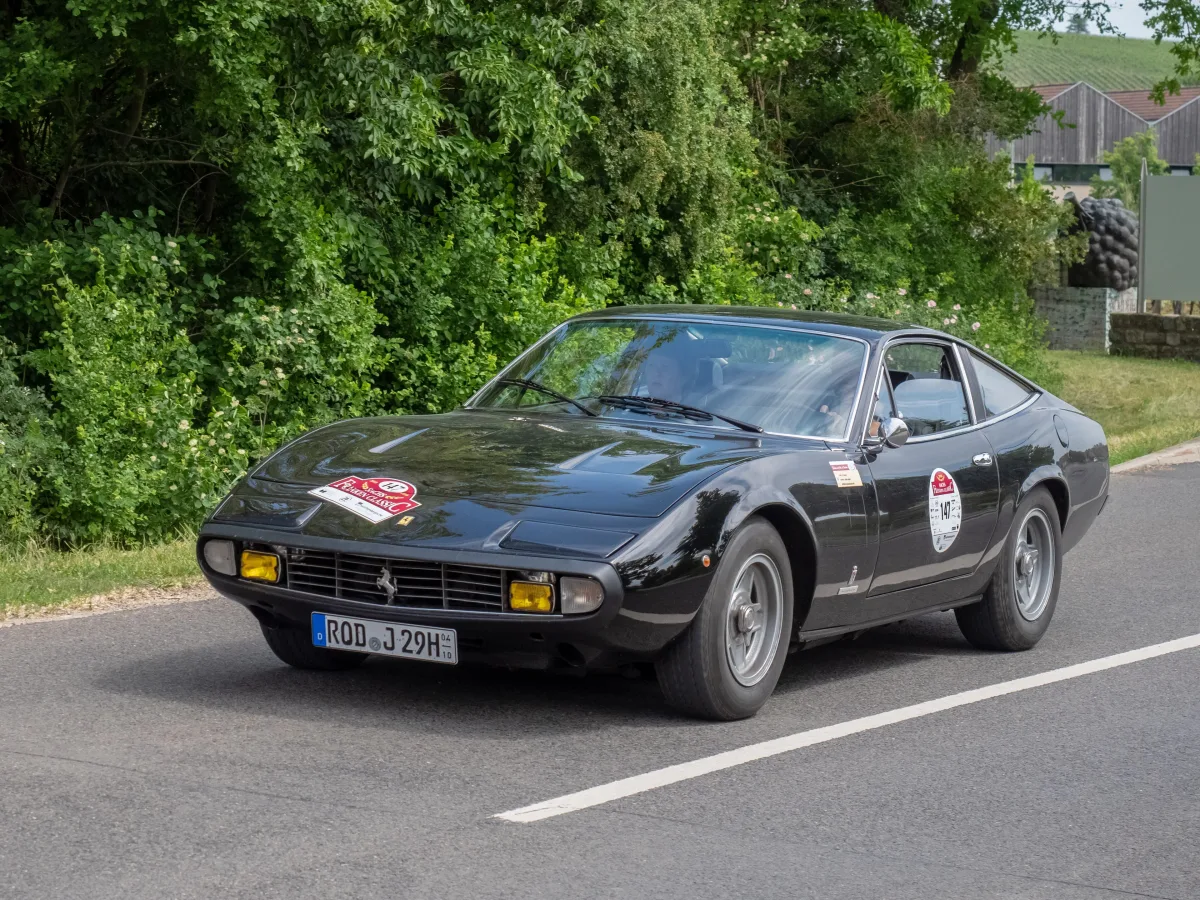
Ferrari 365 GTC/4: V12 grand tourer from 1971–1972 – what to know
Ferrari 365 GTC/4 — the 1971–1972 2+2 grand tourer with a front-mounted V12, built on the legendary Daytona chassis. We look at what makes it special, its technology, and what to consider when buying this classic car.






365 GTC/4 in brief
365 GTC/4 — a two-door, four-seat coupé with a Pininfarina body, based on the 365 GTB/4 Daytona chassis. It replaced the two-seat 365 GTC, which ceased production in 1970.
Production lasted just two years, during which 505 cars were made. The sleek shape, hidden headlights, and sharp lines recall the Daytona, but the car is geared towards comfort.
What sets it apart
The standard equipment was unusually rich for a Ferrari of the time: power steering, electric windows, and air conditioning. The interior was trimmed in leather and perforated fabric, unique to this model, while a fully leather interior was an optional extra.
All cars came with a matte black rear light panel. In 1972, it was replaced by the 365 GT4 2+2 with a longer wheelbase.
Engine and transmission
The car is powered by a 4.4-litre V12, with output reduced to 340 hp (250 kW) to make the engine more suited to daily use. Instead of the Daytona's carburettors, six twin-choke Weber carburettors are used.
For the US market, power was reduced to 320 hp due to emissions regulations. The transmission is a 5-speed fully synchronised manual, mated to the engine.
Thanks to the rear-mounted engine and transaxle, the weight distribution is nearly perfect — around 51:49.
What to check when buying a 365 GTC/4
A collectible Ferrari requires a thorough inspection: body and chassis numbers, documents, factory specifications, and a full restoration history.
The body is steel with aluminium doors and an engine cover, so check for rust in the sills, wheel arches, and underbody. Ensure the engine has no oil leaks and that the carburetors are correctly tuned.
Expensive to maintain: air conditioning, hydraulics, and electrical components are often no longer original. Before buying, find out who performed the last service.


Trim levels
Classic cars don't have a single trim system, so we describe the versions by production period and body style.
365 GTC/4 (Europa)
1971–1972 model yearsEuropean specification version with a 340 HP engine.
- 4.4-litre V12, around 340 HP
- Power-assisted steering
- Air conditioning and electric windows
365 GTC/4 (JAV)
1971–1972 model yearsU.S. market version.
- Around 320 HP due to emissions regulations
- Three-point seatbelts
- Side indicators and other compliance equipment
Odinis salonas
on requestFully leather interior as an optional extra
- Standard was leather and cloth
- Leather interior — optional extra
- It's all about the looks
Borrani ratai
on requestMulti-spoke alloy wheel option
- Standard — cast magnesium wheels
- Borrani — optional
- Visually more classic
Comparing versions
| Europos | JAV | Odinis salonas | |
|---|---|---|---|
| Who it's for | For collectors in Europe | For imported examples | For a more luxurious look |
| Power | Around 340 AG | Around 320 AG | Around 340 AG (Europe) |
| Gearbox | 5-speed manual | 5-speed manual | 5-speed manual |
| Price in the used market (relatively) | €€€ | €€€ | €€€ |
Priority should go to European-spec cars with proper documentation and a known history. Price heavily depends on condition and origin.
Pros
- Elegant Pininfarina design
- Daytona V12 with everyday comfort
- Four seats and rich period features
- Rare and collectible model
Cons
- Very expensive and hard to find
- Maintenance and repairs are costly
- Less celebrated in the market than the Daytona
Frequently asked questions
How many 365 GTC/4s were produced?
505 cars produced over two years.
How does it differ from the Daytona?
The GTC/4 is a more comfortable 2+2 coupe with power reduced to 340 HP and a 5-speed gearbox, paired with the engine.
Is it suitable for daily driving?
Thanks to the power steering, air conditioning, and a more docile engine, it's more comfortable than the Daytona, but it's still a collector's car with high maintenance costs.
Updated 2026-10-21 · Trim levels and equipment vary by market and model year — check the equipment of the specific car. · Translated automatically


