 English
 Lietuvių
 Latviešu
 Eesti
 Polski
 Русский
 Українська
 Deutsch
 Nederlands
 Čeština
 Slovenčina
 Svenska
 Norsk
 Dansk
 Suomi


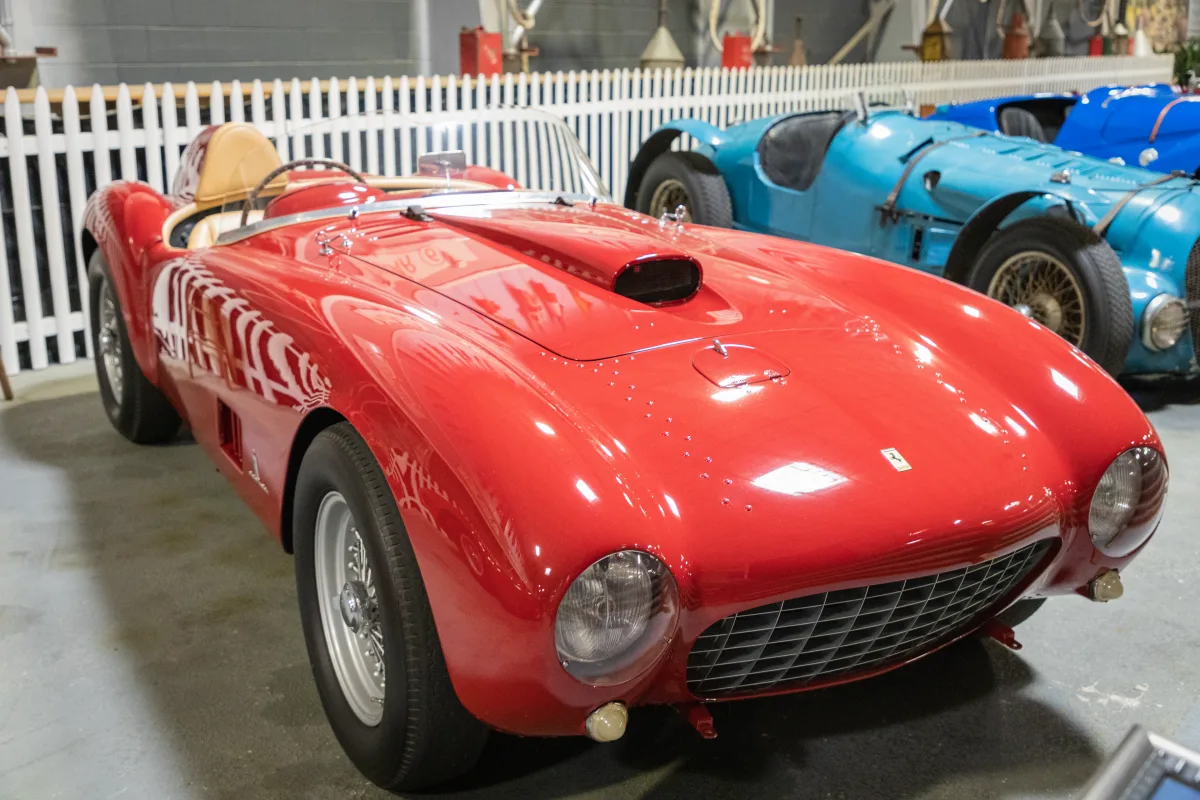
Ferrari 375 MM: V12 sports car from the 1950s
The Ferrari 375 MM — a series produced from 1953 to 1955 with just 26 units featuring a 4.5-litre V12 engine. Primarily a racing sports car, a few examples were fitted with road-going bodies. This article explores its origins, engine, and what you need to know when considering buying one.






375 MM in brief
The 375 MM was built for endurance racing: it won the 1953 Spa 24 Hours and the 12 Hours of Pescara, contributing to Ferrari's victory in the 1953 sports car championship. A total of 26 cars were produced, four of which were converted from the earlier 340 MM model.
Most car bodies were made by Pinin Farina, as well as Vignale and Scaglietti. Production ran from 1953 to 1955.
Bodies and notable examples
Available body styles include spider (open), berlinetta, and coupé. The most famous is the so-called “Bergman Coupé,” commissioned in 1954 by director Roberto Rossellini for his wife, actress Ingrid Bergman, and painted in a special colour.
Most of the cars were intended for racing, with some later adapted for the road.
Engine and technology
The engine is a Lampredi 4.5-litre V12, producing around 340 PS (335 hp) at 7000 rpm. There were two versions: the factory type (type 102) and the client version (type 108), both with equal power.
This is 1950s racing technology, so don't expect modern comfort and safety — it's primarily a collector's and historic racing car.
What to check when buying a Ferrari 375 MM
Most importantly — provenance, chassis and engine numbers, and racing history. Such cars are usually sold through specialist auctions and collector networks.
Check if the body and engine are original, and if the car has Ferrari Classiche or another expert certification. Pay attention to previous repairs as well.
Before buying, consult with a classic Ferrari specialist.


Trim levels
Bodies are built separately, so common types are listed.
Spider
1953–1955Open body — usually a Pinin Farina design.
- Open sports body
- Lampredi 4.5 L V12
- Racing pedigree
Berlinetta
1953–1955Closed sports body.
- Closed body
- Lampredi 4.5 L V12
- More comfortable for longer journeys than an open spider
Coupé
1953–1955Special body, for example, the “Bergman Coupé”
- Often — a custom order
- Often — more luxurious interior
- Very rare
Body comparison
| Spider | Berlinetta | Coupé | |
|---|---|---|---|
| Who it suits | Shows and historic racing | For the collection | Especially for the collection |
| Engine | 4.5-litre V12, around 340 PS | 4.5-litre V12, around 340 PS | 4.5-litre V12, around 340 PS |
| Price in the used market (relatively) | Very expensive | Very expensive | Very expensive |
Each 375 MM is unique. The key is provenance, racing history, and documentation, not the spec.
Pros
- Very rare and valuable car
- Racing history and victories
- Lampredi V12 engine
- Bodies by Pinin Farina and other masters
Cons
- A unique price tag
- Lacking modern comforts
- Hard to find and maintain
Frequently asked questions
How many Ferrari 375 MMs were produced?
26 cars, four of which were converted from the 340 MM.
What engine does the 375 MM have?
A Lampredi 4.5-litre V12, producing around 340 PS.
What makes the 'Bergman Coupé' special?
It's a 1954 coupé commissioned by Roberto Rossellini for his wife Ingrid Bergman, painted in a special shade.
Updated 2026-10-21 · Trim levels and equipment vary by market and model year — check the equipment of the specific car. · Translated automatically


