 English
 Lietuvių
 Latviešu
 Eesti
 Polski
 Русский
 Українська
 Deutsch
 Nederlands
 Čeština
 Slovenčina
 Svenska
 Norsk
 Dansk
 Suomi


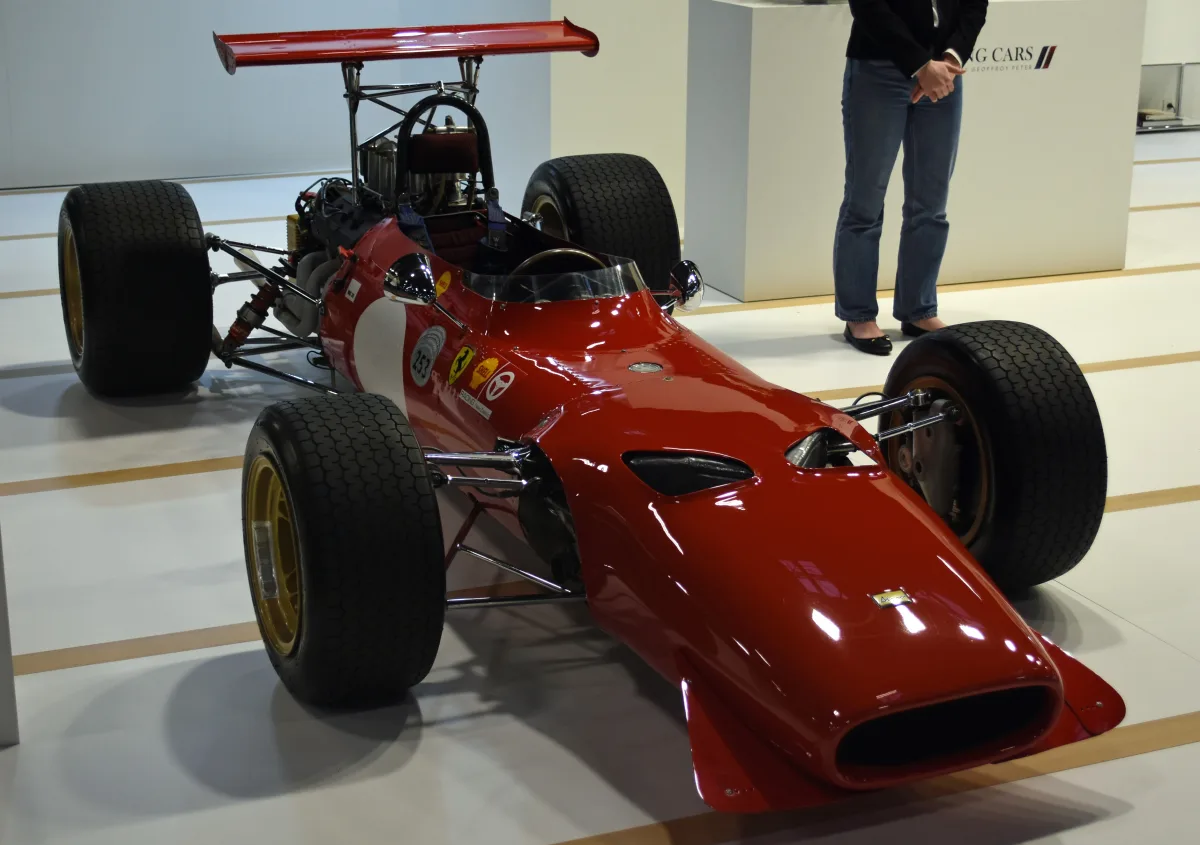
Ferrari Dino 166 F2: 1967–1969 Formula 2 single-seater
The Ferrari Dino 166 F2 is an open-wheel Formula 2 car that Scuderia Ferrari built in 1967 for the new European Formula 2 championship. Here, we delve into its origins, technology, and the seasons it raced.






The Dino 166 F2 in brief
The Ferrari Dino 166 F2 is an open-wheel Formula 2 racing car that Scuderia Ferrari designed, built, and produced in 1967. A total of seven such cars were made.
The name indicates a 1.6-litre engine capacity and six cylinders, while 'Dino' honours the Ferrari family's engine line named after Enzo Ferrari's son, Alfredo 'Dino' Ferrari.
History and development
In 1967, a separate European Formula 2 championship was established, and the 166 F2 was created specifically for it. Up until then, Ferrari had competed in Formula 2 only when the Formula 1 World Championship rounds were held under Formula 2 regulations, mostly in the 1950s.
The car featured a six-cylinder engine based on several Dino V6 car components, and its chassis was a mix of tubular and sheet metal construction. Scuderia Ferrari entered it just once in 1967, with a more serious campaign starting in 1968.
Technology and achievements
In 1968, the engine received 24 valves, and the car underwent improvements. That year, Ernesto Brambilla and Derek Bell finished third and fourth in the European Formula 2 championship.
In 1969, Bellas was fifth, Brambilla eighth. Ferrari's Formula 2 programme ended at the close of 1969. The car was used briefly afterwards: Andrea de Adamich raced in the Argentinian Temporada series, and Chris Amon won the Tasman series in 1969, proving that this family's car was essentially competitive.
Where to see it and whether it can be bought
Dino 166 F2 cars are usually owned by collectors and some are displayed at exhibitions, such as the Paris Rétromobile show. They also participate in historic racing events.
They are sold very rarely, and prices are not publicly advertised. This is a true racing single-seater collector's item, not a road car.


Versions and evolution
Only seven of this type of car were produced, so there aren't many different versions.
Dino 166 F2 (1967 m.)
1967The first version with a six-cylinder Dino V6 engine.
- Tubular and sheet metal construction
- Six-cylinder engine
- It only started once in 1967
Dino 166 F2 (1968 m.)
1968A more robust, improved version.
- 24-valve engine
- Improved suspension
- Finished 3rd and 4th in the Brambilla and Bella championship
166 F2 and Dino sports cars
| Dino 166 F2 | Dino 206 SP | Dino 206 S | |
|---|---|---|---|
| Type | Formula 2 single-seater | Sports prototype | Sports prototype |
| Years | 1967–1969 | 1965 | 1966–1967 |
| Engine | Six-cylinder Dino V6, 1.6 l | 2.0 l V6 | 2.0 l V6 |
| Produced | 7 | Prototype | 18 |
166 F2 — open-wheel single-seater, while the 206 SP and 206 S belong to the line of sports prototypes with a larger, 2.0-litre V6; all of them are united by the Dino V6 engine family.
Pros
- The genuine Ferrari Formula 2 single-seater
- Part of the Dino V6 engine family
- Competitive in the 1968–1969 seasons
- Extremely rare — only seven were produced
Cons
- Not road-legal
- Very difficult to acquire
- Short career — the program ended in 1969
Frequently asked questions
How many Ferrari Dino 166 F2s were produced?
A total of seven cars were produced.
Did the 166 F2 have a V12 engine?
No, it had a six-cylinder Dino V6 engine, developed based on the Dino V6 road car.
What were its best results?
In 1968, Brambilla and Bellas finished third and fourth in the European Formula 2 Championship, while Chris Amon won the Tasman Series in 1969.
Updated 2026-10-21 · Trim levels and equipment vary by market and model year — check the equipment of the specific car. · Translated automatically


