 English
 Lietuvių
 Latviešu
 Eesti
 Polski
 Русский
 Українська
 Deutsch
 Nederlands
 Čeština
 Slovenčina
 Svenska
 Norsk
 Dansk
 Suomi


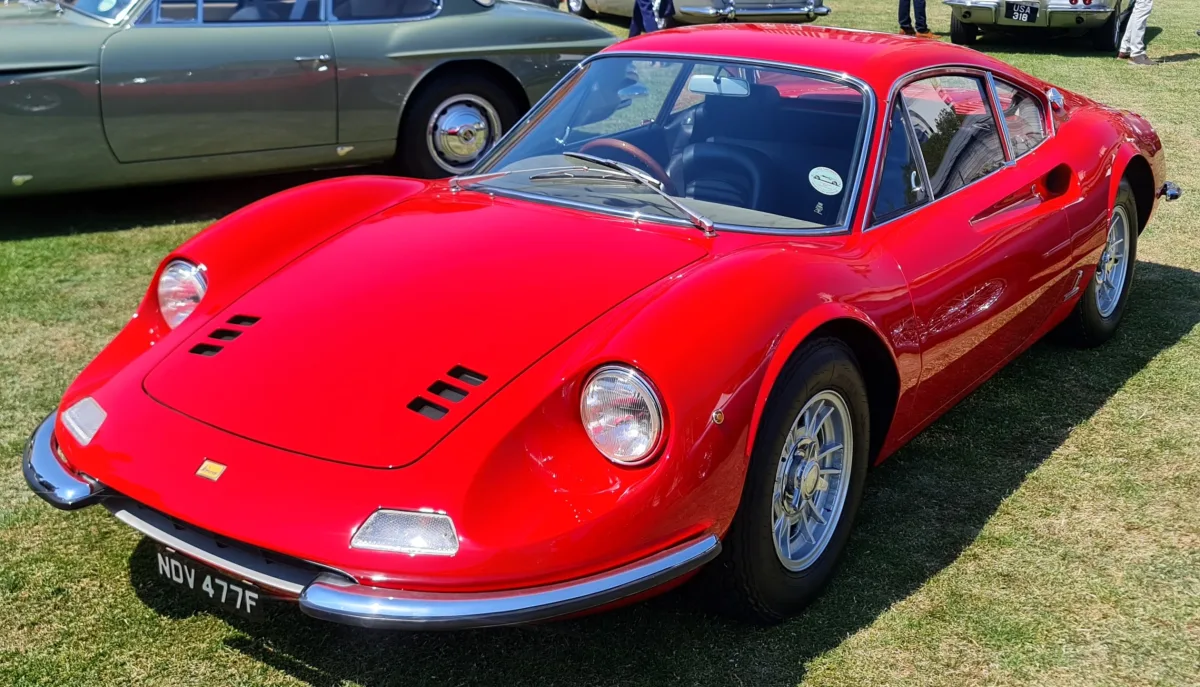
Dino 206 GT: The mid-engined V6 sports car – what you need to know
The Dino 206 GT – a small sports car with a mid-mounted V6 engine produced between 1967 and 1969, sold under the Dino rather than Ferrari badge. We look at what makes it special, how it differs from the later 246 GT, and what to consider if you're eyeing one of these rare examples as a collector's item.






Dino 206 GT in brief
The Dino 206 GT is a two-seater sports car with a transversely mounted mid-engine, aluminium body, and independent suspension on all wheels. It was designed by Pininfarina (designers Aldo Brovarone and Leonardo Fioravanti) and built by Scaglietti.
The car was sold under the Dino badge, named after Enzo Ferrari's son Alfredo. The later Dino 246 is considered the first Ferrari to be produced in larger numbers.
206 GT vs 246 GT – what's the difference
A total of 152 Dino 206 GTs were produced between 1967 and 1969, all with right-hand drive. It's a very rare car, so its value and collectability are high.
In 1969, it was replaced by the 246 GT with a larger 2.4-litre engine, steel body, and longer wheelbase. Later came the convertible 246 GTS. If you're after a more practical and commonly available Dino, the 246 is the easier choice.
Engine and gearbox
The 206 GT has a 2.0-litre, 65-degree all-aluminium V6 engine with dual overhead camshafts. It produces around 180 hp (132 kW) at 8,000 rpm.
The engine is fed by three Weber twin-chamber carburettors and drives through a manual gearbox. Top speed is around 235 km/h. The same engine was used in the Fiat Dino coupé and cabriolet.
What to check when buying a Dino
Before purchasing a classic car, consult a Ferrari expert. Check the chassis and body numbers, documents, originality and restoration history.
Inspect the underside of the body, wheel arches and joints with the frame for signs of corrosion or poor repairs. Check that the paint and gaps match the factory specifications.
Key checks for the engine include oil leaks, carburettor adjustments and the ignition system. It's best to buy such a car from a reputable specialist or auction with a clear documentation history.


Trim levels
Classic cars don't have a single trim system, so we describe the versions by production period and body style.
Dino 206 GT
1967–1969The first series with a 2.0-litre V6 and aluminium body.
- 2.0-litre V6, around 180 hp
- Aluminium body
- 152 units produced, right-hand drive only
Dino 246 GT
From 1969The successor with a larger engine and steel body.
- 2.4-litre V6 engine
- Longer wheelbase
- More common than the 206
Dino 246 GTS
Later versionTarga-top version.
- Removable roof panel
- Same tech as the 246 GT
- Popular among collectors
Fiat Dino
1966–1972 model yearsRelated Fiat car with the same engine.
- Based on the Dino V6
- Coupé and spyder body styles
- Not a Ferrari badge
Comparison of Dino versions
| 206 GT | 246 GT | 246 GTS | |
|---|---|---|---|
| Who it's for | For collectors | For everyday classic use | For open-top driving |
| Engine | 2.0 l V6 | 2.4 l V6 | 2.4 l V6 |
| Body | Aluminium | Convertible | Convertible, targa |
| Price in the used market (relatively) | €€€ | €€€ | €€€ |
The 206 GT is rarer and more collectible, while the 246 is more practical and frequently sold. Only worth buying with a known history and full documentation.
Pros
- Stunning Pininfarina design
- Mid-mounted V6 engine and lightweight aluminium body
- Very rare, collectible car
- Lively, balanced handling
Cons
- Very expensive and hard to find
- Maintenance and restoration are costly
- Aluminium body repairs are complex
Frequently asked questions
How many Dino 206 GTs were produced?
152 cars were produced between 1967–1969, all with right-hand drive.
Is the Dino a Ferrari?
Dino was a separate badge owned by the Ferrari group. Today, these cars are valued by collectors as part of Ferrari history.
How does the 206 GT differ from the 246 GT?
The 206 has a 2.0 l engine and an aluminium body, while the 246 has a 2.4 l engine and a steel body.
Updated 2026-10-21 · Trim levels and equipment vary by market and model year — check the equipment of the specific car. · Translated automatically


