 English
 Lietuvių
 Latviešu
 Eesti
 Polski
 Русский
 Українська
 Deutsch
 Nederlands
 Čeština
 Slovenčina
 Svenska
 Norsk
 Dansk
 Suomi


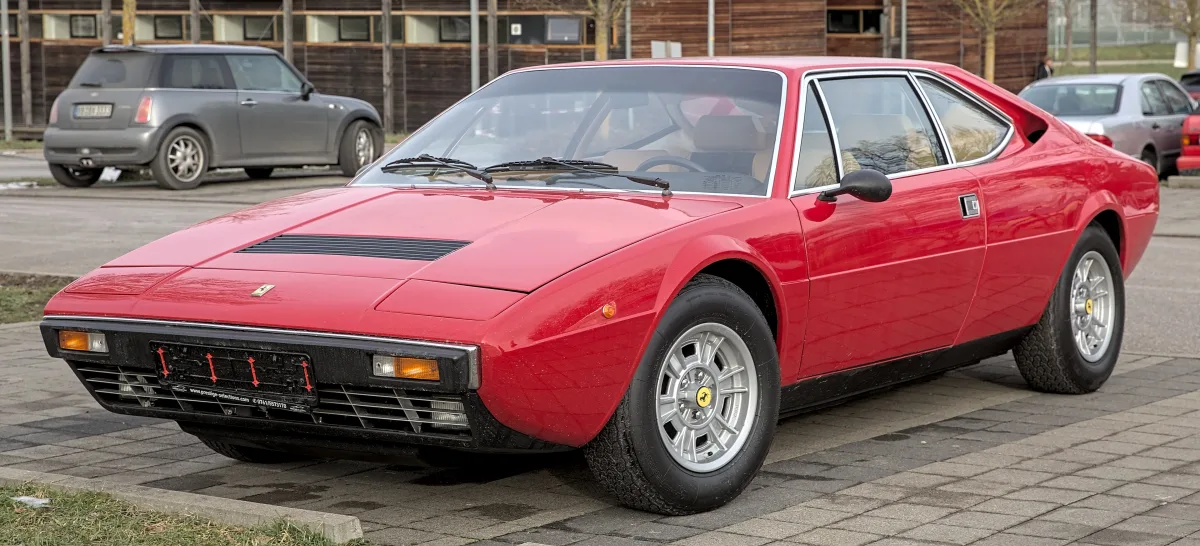
Ferrari GT4: Dino 308 GT4 and 208 GT4, engines and what the collector needs to know
The Ferrari GT4 is the name most commonly used for the Dino 308 GT4 — a 2+2-seater sports coupé produced by Bertone from 1973 to 1980 with a mid-engine V8. In this article, we look at the model's history, versions, and what to check before buying.






GT4 in brief
The Dino 308 GT4 was the first Ferrari with a mid-engine V8 and the first series-production Ferrari designed by Bertone, not Pininfarina. It's a 2+2-seater coupé, making it more practical than two-seater sports models.
Today, the GT4 has become a sought-after model among collectors not so much for its striking design, but for its place in Ferrari history. It's a very rare car in Lithuania.
Which version to choose
Initially, the model was sold under the Dino badge, later, around 1976, it started being called the Ferrari 308 GT4. A smaller-engined version, the 208 GT4, was produced for the Italian market.
When choosing, pay attention to the condition, paperwork, and originality. European market cars often have more powerful engines than some market versions, which were restricted by emissions regulations.
Engine and gearbox
The 308 GT4 has a 3.0-litre V8 engine, with the European market version producing around 255hp, while some markets had less powerful versions. The 208 GT4 has a 2.0-litre V8 with less power.
The gearbox is a 5-speed manual. The engine is mounted transversely behind the cabin, with power sent to the rear wheels.
What to check when buying a GT4
First things first — the body: check for corrosion, especially around the sills, floor, and front end. For collectible Ferraris, make sure to verify the documents and ensure the car hasn't been repainted or undergone major repairs.
The engine and gearbox should be assessed by a classic Ferrari specialist. Check the oil leaks, cooling system, carburetor (or fuel system) condition, and the history of timing belt changes.


Trim levels
Names and equipment vary by market and year; we list the versions most commonly found in Europe.
Dino 308 GT4
1973–around 1976The first version with the Dino badge.
- 3.0-litre V8 engine
- Bertone design
- 5-speed manual gearbox
Ferrari 308 GT4
Around 1976–1980Later version with the Ferrari badge.
- 3.0-litre V8 engine
- Bertone design
- 5-speed manual gearbox
208 GT4
1975–1980Smaller engine version, mainly for the Italian market.
- 2.0-litre V8 engine
- Similar body and interior
- 5-speed manual gearbox
GT4 generation comparison
| Dino 308 GT4 | Ferrari 308 GT4 | 208 GT4 | |
|---|---|---|---|
| Who it's for | For collectors seeking an early version | For those after a later, more common variant | For Italian market enthusiasts |
| Engine | 3.0 l V8 | 3.0 l V8 | 2.0 l V8 |
| Gearbox | 5-speed manual | 5-speed manual | 5-speed manual |
| Price in the used market (relatively) | €€€ | €€€ | €€€ |
All versions are collector's cars. For most buyers, condition and a clear history are key, rather than specific version differences.
Pros
- Bertone design and a unique place in Ferrari history
- Mid-rear V8 engine and sporty driving
- 2+2 seats are more practical than two-seater models
- A model prized by collectors
Cons
- Very expensive maintenance and parts
- Risk of corrosion in older bodies
- Limited supply, hard to find a well-maintained example
Frequently asked questions
Why is the GT4 called the Dino?
In its early years, the car was sold under the Dino badge, later, around 1976, it was renamed the Ferrari 308 GT4.
What makes the GT4 special?
It was the first Ferrari with a mid-rear V8 engine and the first designed by Bertone's design studio.
Is the GT4 suitable for daily driving?
It might work for occasional use, but due to its age and high maintenance costs, it's better suited for collector or weekend use.
Updated 2026-10-19 · Trim levels and equipment vary by market and model year — check the equipment of the specific car. · Translated automatically


