 English
 Lietuvių
 Latviešu
 Eesti
 Polski
 Русский
 Українська
 Deutsch
 Nederlands
 Čeština
 Slovenčina
 Svenska
 Norsk
 Dansk
 Suomi


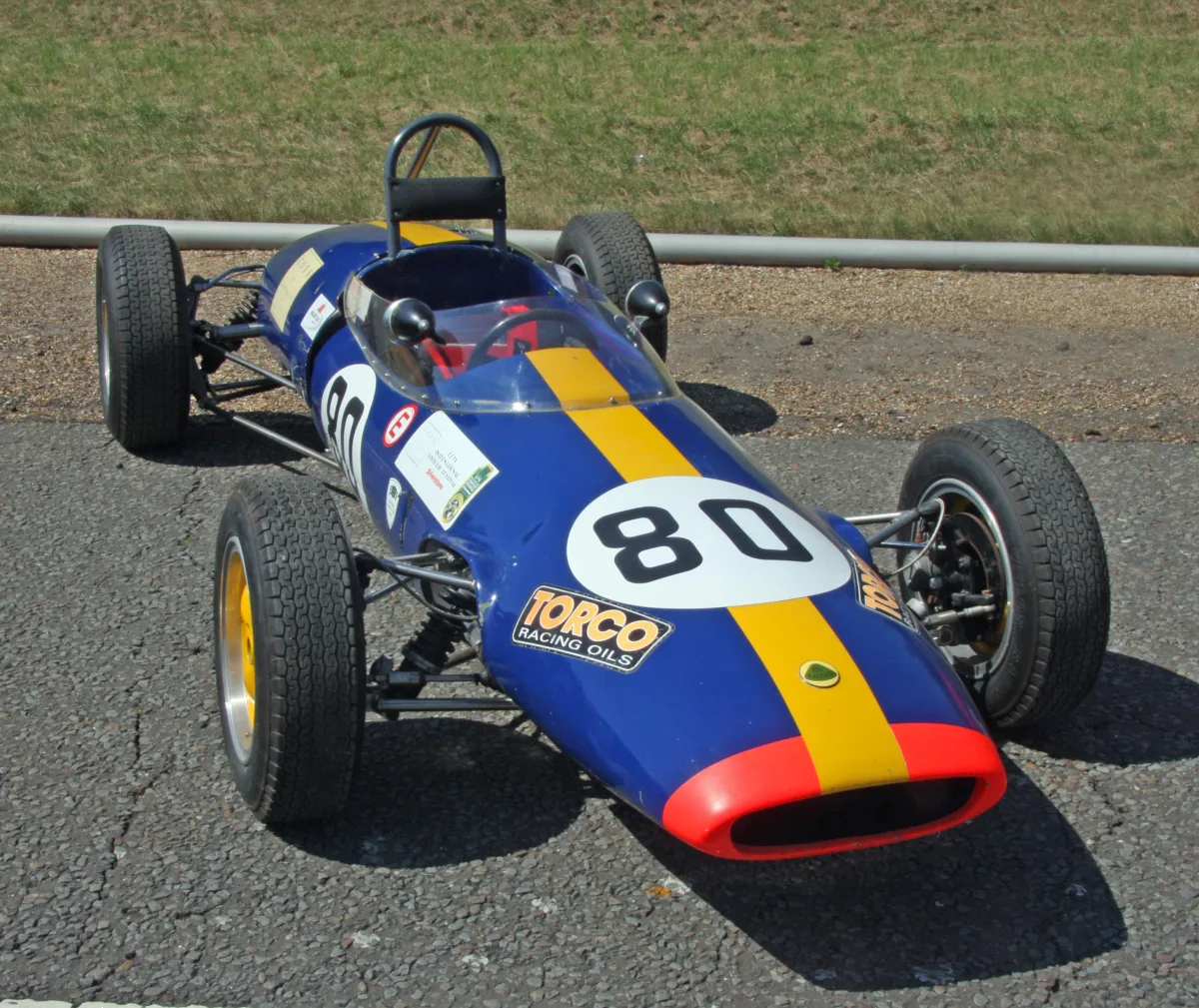
Lotus 20: 1961 Formula Junior race car
Lotus 20 — 1961 Lotus-built Formula Junior single-seater, successor to the Lotus 18. In this article, we look at its technology, variants, and place in Lotus history.






Lotus 20 in brief
The Lotus 20 was a Formula Junior class car, built for the 1961 season as a successor to the Lotus 18. It's a race car, not a road car, so in this article, we focus mainly on its technology and purpose.
Due to its small size and simple construction, the Formula Junior class was an important training ground for young drivers, and the Lotus 20 was one of its notable representatives.
Technology
The car featured a spaceframe chassis with a fibreglass body. At the front, there were double cross-members, and at the rear, a lower cross-member, with a fixed-length half-shaft serving as the upper link. Initially, all wheels had Alfin drum brakes, later switching to discs at the front and inboard drums at the rear.
The standard engine was the Cosworth Mk.IV, and the gearbox was from the Renault Dauphine or a modified Hewland VW. Compared to the Lotus 18, the 20 had a significantly smaller front overhang and a lower centre of gravity, as the driver sat almost lying down.
Variants and usage
The Lotus 20B was almost identical but came with a stabiliser bar and standard inboard drum brakes at the rear. Sometimes, the 20B was fitted with the Lotus Twin Cam engine, so these cars weren't Formula Junior but competed in Formula Libre and other series, such as the Tasman.
Two Lotus 20s were registered for the 1965 South African Grand Prix — Dave Charlton failed to qualify, while Brian Raubenheimer withdrew due to a gearbox issue in practice.
Where to see and if you can buy one
A 1962 Lotus 20 is on display at the Canadian Automobile Museum — it's suspended from the ceiling on the second floor. More examples reside in private collections and compete in historic racing events, such as the Silverstone Classic.
Original cars are rarely for sale; if a 'Lotus 20' is offered, it's crucial to verify the chassis number and documentation.


Versions
This is a race car, so there are no trims; we list the main variants.
Lotus 20
1961The primary Formula Junior version.
- Cosworth Mk.IV engine
- Spaceframe chassis and fibreglass body
- Recumbent driver position
Lotus 20B
Later versionImproved version with stabiliser.
- Inboard drum brakes at the rear
- Sometimes with a Twin Cam engine
- Perfect for Formula Libre and Tasman
Lotus 20 and its predecessor, the Lotus 18
| Lotus 18 | Lotus 20 | |
|---|---|---|
| Who it's for | For Formula Junior and other classes | Formula Junior |
| Driver's seating position | More upright | Nearly flat |
| Frontal area | Larger | Smaller |
| Market price (relatively) | €€€ | €€€ |
The Lotus 20 was a step up from the 18: a smaller frontal area and lower centre of gravity helped it become a successful Formula Junior car.
Pros
- Small frontal area
- Low centre of gravity
- Simple, reliable construction
- Historical significance in Formula Junior
Cons
- Can't be driven on public roads
- Limited supply
- Expensive for collectors
Frequently asked questions
How does the Lotus 20 differ from the Lotus 18?
It has a smaller front area and a lower centre of gravity, as the driver sits almost flat.
What class is the Lotus 20?
Formula Junior.
What is the Lotus 20B?
An improved version with a stabiliser and inboard drum brakes at the rear.
Updated 2026-10-21 · Trim levels and equipment vary by market and model year — check the equipment of the specific car. · Translated automatically


