 English
 Lietuvių
 Latviešu
 Eesti
 Polski
 Русский
 Українська
 Deutsch
 Nederlands
 Čeština
 Slovenčina
 Svenska
 Norsk
 Dansk
 Suomi


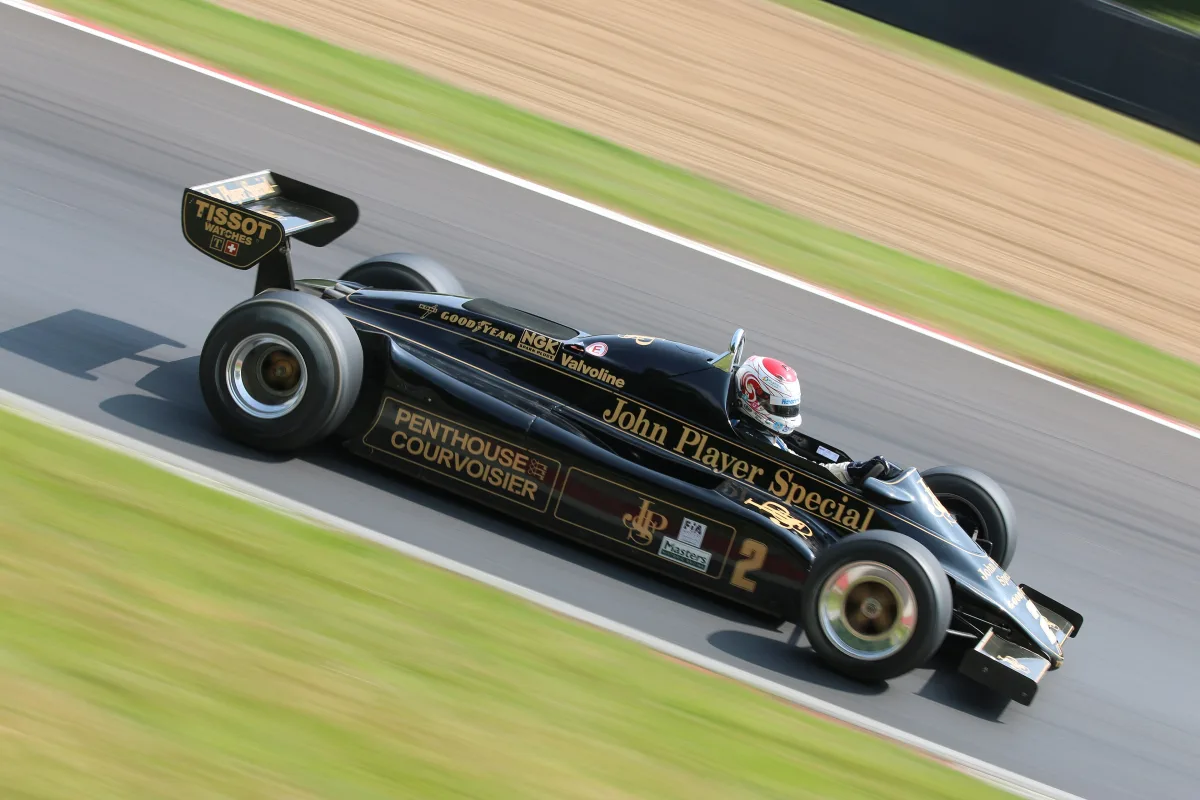
Lotus 91: The 1982 Formula 1 Racer and Chapman's Final Victory
The Lotus 91 — the 1982 Formula 1 car built by Colin Chapman and his team. This was the last Lotus racer to win a race under Chapman's leadership. We delve into its technology and significance.






The Lotus 91 in brief
The Lotus 91 was the 1982 Formula 1 car, designed by Colin Chapman, Martin Ogilvie, and Tony Rudd. After a few unsuccessful or experimental seasons, Chapman decided to 'get back to basics'.
This is a race car, not a road model, so we'll cover its history and technology.
Technology
The car was powered by a Ford Cosworth DFV engine, with a standard Hewland gearbox. The racer was quite simple and easy to maintain; it was the first Lotus with carbon fibre brakes, which significantly improved braking.
The body was made from carbon fibre and Kevlar — after the McLaren MP4/1 and the Lotus 87 itself, this was the third car of the season made from this material to compete in F1. The car was sensitive to aerodynamic fluctuations, making it challenging to drive.
On the track
Elio de Angelis was particularly competitive in the 91 on fast circuits — at Hockenheim, Monaco, and the Österreichring. It was in Austria where he overtook the Williams driver Keke Rosberg on the final lap to win the race.
The victory, along with other results from de Angelis and Mansell's podium finish, helped the team end the season in fifth place. In 1983, with ground effect banned, the 91 was replaced by the first Lotus turbo car.
Legacy
This was the last Lotus F1 car to win a race under Colin Chapman's leadership — on December 16, 1982, Chapman died of a heart attack.
The Lotus 91 served as the basis for the Lotus 92 — the first F1 car with active suspension. Surviving examples belong to collections and historical racing participants; acquiring one as a regular car is impossible.


Versions
This is a racing car, so there are no trims; we list the main variants.
Lotus 91
1982A straightforward, lightweight Cosworth racer without turbo.
- Ford Cosworth DFV engine
- Carbon fibre and Kevlar body
- First Lotus carbon fibre brakes
Lotus 92
1983Modified 91, tested with active suspension.
- Active suspension
- Ford Cosworth engine
- Experimental model
91 and its close predecessor
| Lotus 87 | Lotus 91 | |
|---|---|---|
| Who's it for? | For racing history enthusiasts | For racing history enthusiasts |
| Engine | Ford Cosworth DFV | Ford Cosworth DFV |
| Season | 1981–1982 | 1982 |
| Market price (relatively) | Practically unattainable | Practically unattainable |
The Lotus 91 is a simple yet effective racer that won against more powerful turbo rivals and became the last Chapman-era winner.
Pros
- The last Chapman-era victory
- First Lotus carbon fibre brakes
- Simple, reliable construction
- Based on the Lotus 92 with active suspension
Cons
- Cannot be used on public roads
- Purchasing is practically impossible
- Sensitive to aerodynamic fluctuations
Frequently asked questions
Did the Lotus 91 win any races?
Yes, it won the 1982 Austrian Grand Prix with Elio de Angelis at the wheel.
Who designed the Lotus 91?
It was engineered by Colin Chapman, Martin Ogilvie and Tony Rudd.
How significant is the Lotus 91?
It was the last Lotus car to win a race under Colin Chapman's leadership and the foundation for the Lotus 92.
Updated 2026-10-21 · Trim levels and equipment vary by market and model year — check the equipment of the specific car. · Translated automatically


