 English
 Lietuvių
 Latviešu
 Eesti
 Polski
 Русский
 Українська
 Deutsch
 Nederlands
 Čeština
 Slovenčina
 Svenska
 Norsk
 Dansk
 Suomi


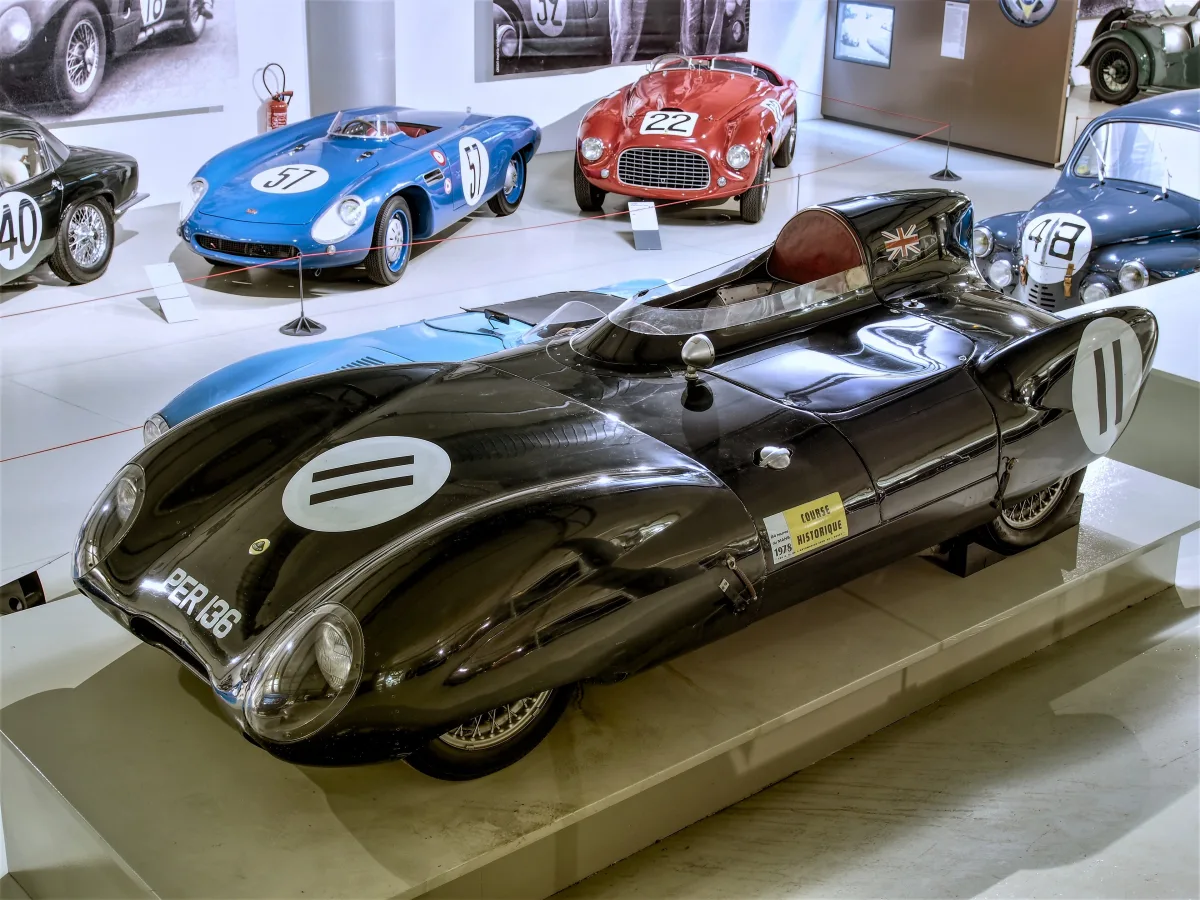
Lotus Eleven: 1956–1958 Colin Chapman's sports racing car
Lotus Eleven — the lightweight sports racing car produced from 1956–1958, one of the most successful early Lotuses. We look at its versions, technology, and achievements at Le Mans and Sebring.






Lotus Eleven in brief
Lotus Eleven — a sports racing car produced in various versions from 1956 to 1958. Around 270 were made in total. Later 1958 versions are sometimes unofficially called the Lotus 13, although this was never an official designation.
It was created by Colin Chapman, with the aerodynamic body designed by aerodynamics specialist Frank Costin.
The technology
The most powerful 'Le Mans' version featured an 1100 cm³ Coventry Climax FWA engine (sometimes a 1500 cm³ FWB), mounted at the front in a tubular spaceframe construction. The car had a De Dion rear axle and Girling disc brakes.
The fully loaded car weighed just around 450 kg. The main versions were 'Club' (Climax engine) and 'Sport' (1172 cm³ Ford engine) — these had a simpler rear axle and drum brakes.
On the track
Its most notable result was seventh place overall in the 1956 Le Mans 24 Hours (Reg Bicknell and Peter Jopp). In 1956, Stirling Moss with a Costin-modified Eleven, covered with a bubble roof, set a world speed record for the 1100 cm³ class at Monaco — 230 km/h.
The Eleven secured numerous class wins at Le Mans and Sebring, becoming the most successful early Lotus racing car. The 750 cm³ version won the Index of Performance at Le Mans in 1957.
Availability and whether it can be viewed
The 1957 Eleven underwent significant updates, including a new front suspension and improved transmission; this 'Series 2' version is sometimes referred to as the Lotus 13. Many other manufacturers later produced copies of the Eleven, the most famous being the Westfield XI.
Surviving original cars are often seen in museums and historic racing events. The name 'Eleven' was later revived for the modern Lotus 3-Eleven.


Versions
Differences between versions are mainly in the engine, rear axle, and brakes; we highlight the key ones.
Eleven Le Mans
1956–1958The most powerful version with the Coventry Climax FWA engine.
- 1100 cm³ Coventry Climax FWA (rarely 1500 cm³)
- De Dion rear axle, Girling disc brakes
- Weight around 450 kg
Eleven Club
1956–1958A simpler version with the Climax engine.
- 1100 cm³ Coventry Climax
- Live rear axle
- Drum brakes
Eleven Sport
1956–1958Version with Ford engine.
- 1172 cm³ Ford engine
- Live rear axle
- Drum brakes
Eleven Series 2
1957–1958Updated version, unofficially known as the Lotus 13.
- New front suspension
- Improved transmission
- Unofficial name 'Lotus 13'
Comparison of eleven versions
| Le Mans | Club | Sport | |
|---|---|---|---|
| Who it's for | For racing in the 1100 cm³ class | For simpler competitions | For more economical competitions |
| Engine | Coventry Climax FWA | Coventry Climax | Ford 1172 cm³ |
| Rear axle | De Dion | Live | Live |
| Brakes | Disc | Drum | Drum |
| Price in the used market (relatively) | €€€ | €€€ | €€€ |
The Eleven Le Mans is the technically most advanced version, while the Club and Sport were simpler and more affordable alternatives for racers.
Pros
- Very light, aerodynamic body
- Success at Le Mans and Sebring
- Classic sports design
- Many copies and replicas
Cons
- A design dedicated solely to racing
- Original for collectors
- Limited comfort
Frequently asked questions
How many Lotus Elevens were made?
There are around 270 different versions of the car in total.
Is the Lotus Eleven available to buy?
The original car is rarely sold at collectors' auctions, but there are plenty of replicas, the most famous being the Westfield XI.
Why are some Elevens called the „Lotus 13“?
Later 1958 models were built between the 12 and 14 models, with the number 13 not officially used, so they are unofficially called that.
Updated 2026-10-21 · Trim levels and equipment vary by market and model year — check the equipment of the specific car. · Translated automatically


